Get Jungle Island Miami tickets, pricing, and VIP animal encounter options. Learn best times to visit, what to expect, and nearby attractions.
What Is Jungle Island and Why Visit
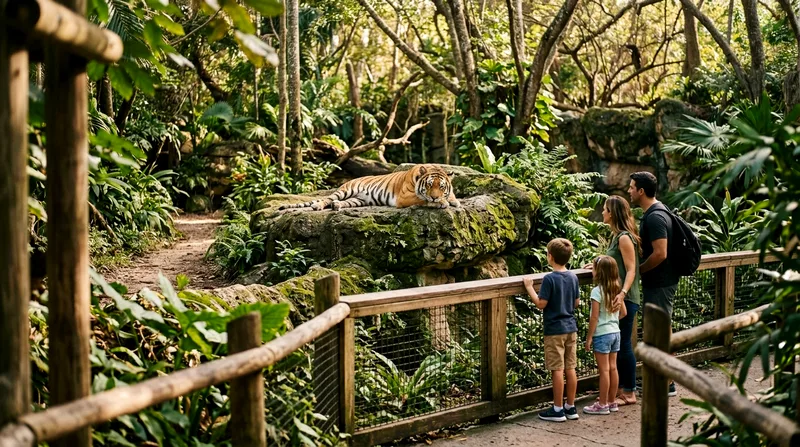
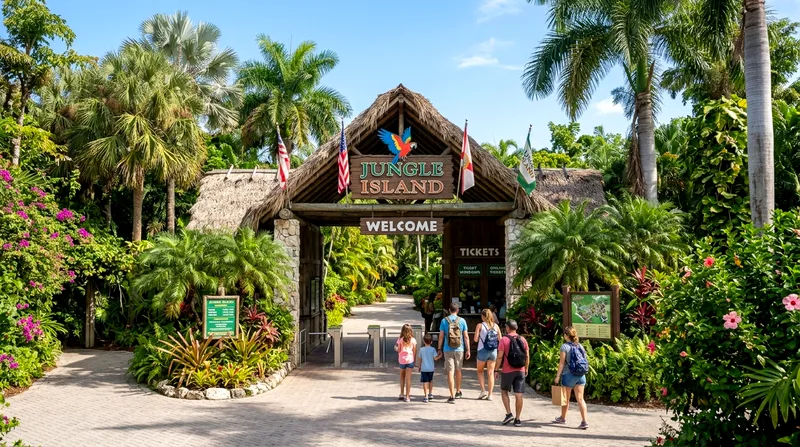
Jungle Island sits on Watson Island, a short causeway hop between downtown Miami and South Beach, right on Biscayne Bay. It's part zoo, part adventure park, part live-show venue — a format that's a bit unusual among Miami's wildlife attractions, which tend to split cleanly into "see animals" (Miami Seaquarium, Zoo Miami) or "do activities" (watersports, ziplines). Jungle Island tries to do both under one admission, with orangutans, tigers, lemurs, parrots, and a notable collection of big cats sharing the grounds with a ropes course and splash pad.
If you're traveling with kids under 12, this is where Jungle Island earns its ticket price. The shows are short — usually 20 to 30 minutes — and paced for shorter attention spans, with a lot of direct animal interaction built in rather than just distant viewing. Couples and solo travelers get less obvious mileage unless they book a specific animal encounter, which is really the product here, not the general walk-through.
Wildlife attractions and animal shows
The park runs several scheduled shows throughout the day — bird shows, big cat presentations, and a signature show featuring parrots and other trained animals performing tricks for a seated audience. These are included in general admission and typically run on a rotating schedule, so check the posted times board near the entrance when you arrive rather than planning your day around assumed slots. Expect capacity-limited seating at peak hours; arriving 10-15 minutes early for popular shows isn't excessive. The animal roster is smaller than Zoo Miami's, which matters if you're comparing the two — Jungle Island leans toward close-contact species (primates, exotic birds, big cats) rather than breadth.
Adventure activities and experiences
Beyond the animals, Jungle Island has a ropes/zipline course and a splash pad area that usually cost extra on top of general admission — read the ticket description carefully before buying, since "all-inclusive" wording varies by package. The adventure elements are aimed squarely at kids and younger teens; adults doing the ropes course should expect a course built for family use, not an extreme sports experience. If you came to Miami specifically for ziplining or adventure parks, this isn't the main event — it's a bonus activity for a day that's primarily about the animals.
How to Visit Jungle Island
You've got two real paths here: buy tickets directly and walk through on your own schedule, or book through a tour/package operator that bundles Jungle Island with transport or other Miami attractions. Neither is objectively better — it depends on whether you value flexibility or convenience more.
Independent visits
Most visitors go independent: buy a timed-entry ticket online, drive or rideshare to Watson Island, and move through the park at your own pace. Parking is on-site and typically charges a flat daily fee separate from admission — budget for it, since it's easy to overlook when comparing ticket prices. The park is compact enough to cover in 3 to 4 hours, which makes it realistic to pair with another half-day activity. Going independent means you control which shows you catch and how long you linger at each habitat, but you'll also be managing your own schedule around show times, which takes a bit of planning once you're inside.
Guided tours and packages
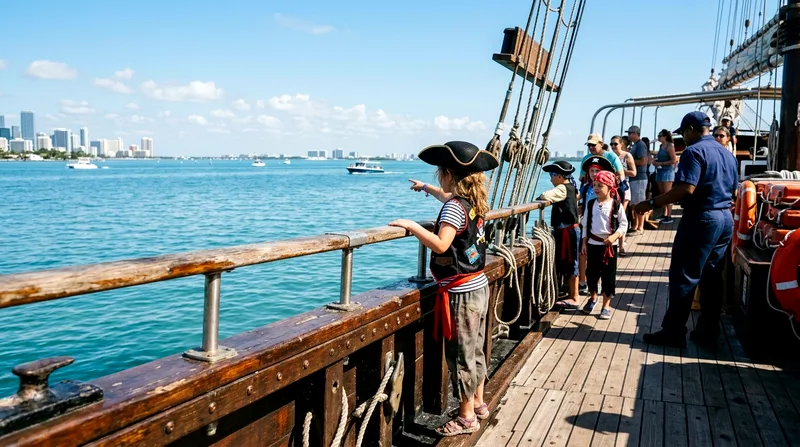
Some Miami tour operators and hotel concierge desks sell Jungle Island as part of a combo package — often paired with a Biscayne Bay boat tour, a Wynwood Walls visit, or hop-on-hop-off bus access. These can save time on logistics, particularly for European travelers or first-time visitors without a rental car, since transport is handled for you. The trade-off is less control over timing — you're often locked into a pickup window and a set amount of time inside the park. If your main goal is the animal encounters rather than general browsing, book those directly with Jungle Island regardless of how you handle the rest of your day, since third-party packages rarely include the premium encounters.
Tickets and Entry Pricing
Jungle Island pricing is tiered, and the gap between general admission and the premium encounters is where most of the planning decisions happen. Treat the base ticket as your park access and treat any animal encounter as a separate line-item purchase you decide on deliberately.
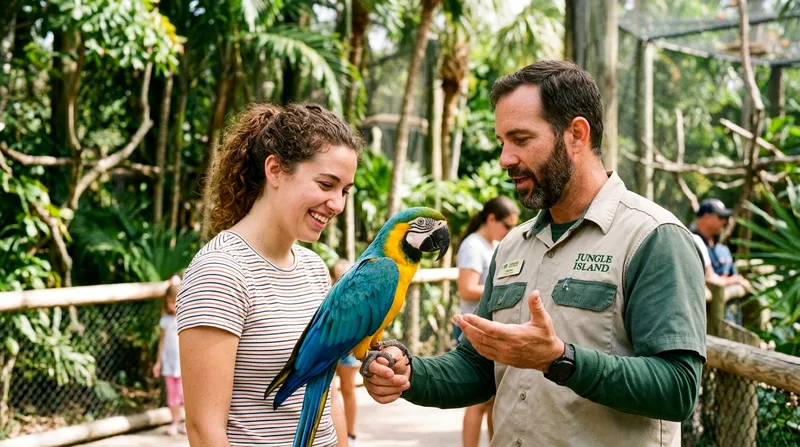
General admission covers the park and shows, while VIP animal encounters are the real upgrade worth booking ahead.
Jungle Island Miami ticket types compared: cost, inclusions, and best for
| Ticket Type | Typical Cost Tier | What's Included | Best For |
|---|---|---|---|
| General Admission (Adult) | Moderate | Park entry, included shows, habitat viewing | First-time visitors, budget-conscious families |
| General Admission (Child) | Lower | Same as adult, reduced rate | Families with kids under typical age cutoff |
| Toddler (under ~2-3 yrs) | Often free | Park entry | Families with infants/toddlers |
| Single Animal Encounter Add-On | Moderate premium per encounter | One specific interaction (e.g., sloth, lemur) | Couples, animal-focused visitors |
| VIP/Premium Package | Highest | Multiple encounters plus priority show seating | Special occasions, repeat visitors wanting more access |
| Annual Pass | Mid-to-high annually | Unlimited visits for one year | Miami-area residents, not one-time tourists |
Prices and bundled inclusions change periodically — confirm current ticket tiers and what's included on the official booking page before purchasing.
General admission options
General admission covers entry to the park, access to the included shows, and walk-through viewing of most habitats. Children typically get a reduced rate compared to adults, and toddlers under a certain age (commonly around 2-3) often get in free — exact age cutoffs are worth checking before you buy since parks adjust these periodically. Annual passes exist for Miami-area residents who visit repeatedly, but for a one-time visitor they're not worth the math. Always compare current prices and ticket tiers directly on the official booking page before purchasing, since admission structures and what's bundled in can shift.
VIP and premium experiences
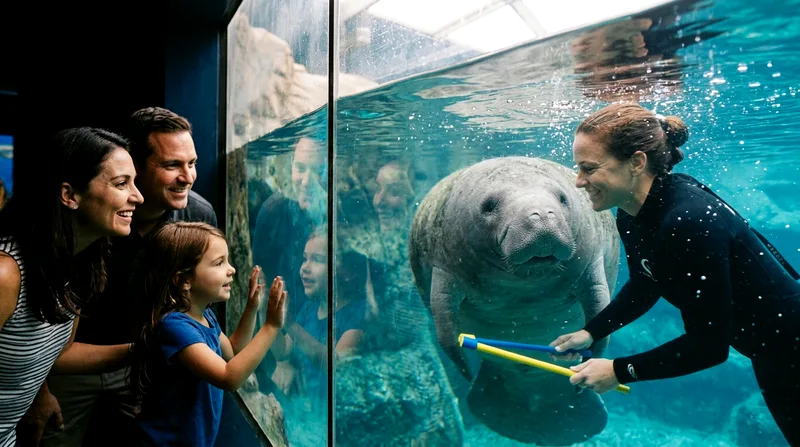
This is the part worth budgeting extra for. Jungle Island sells individual animal encounters — getting close to a sloth, feeding a lemur, or a behind-the-scenes big cat interaction — as add-ons priced separately from admission, usually in the range of a modest premium per encounter rather than a flat park-wide VIP fee. These sell out faster than general admission, especially on weekends, so if a specific encounter is the reason you're visiting, book it in advance rather than hoping to add it at the gate. Don't assume "VIP" tickets include every encounter — read what's bundled, since some premium packages cover only one or two interactions plus front-of-line show seating.
Best Time to Visit
Jungle Island is outdoors and largely uncovered between habitats, which makes timing matter more than at an indoor attraction. Miami's climate swings hard between seasons, and that affects both comfort and crowd size.
Seasonal considerations
Winter months (December through April) bring Miami's dry season — lower humidity, less rain, and more comfortable walking conditions, which is also when most snowbirds and European travelers show up. Summer (June through September) is hot, often into the mid-90s with heavy afternoon humidity, plus the real chance of a sudden thunderstorm that can pause outdoor shows. If you're visiting in summer, aim for a morning slot and expect brief weather interruptions rather than planning around them being avoidable.
Crowd levels and weather
Weekday mornings, especially Tuesday through Thursday, are consistently the quietest time to go — weekends draw local families and can mean longer waits for popular encounters. School holiday weeks (spring break, winter break) push crowds up regardless of day of the week. Arriving at opening and heading straight for your booked encounter time, then working backward through the shows, avoids the midday crowd crunch that builds by early afternoon.
Nearby Attractions and Add-Ons
Watson Island's location is genuinely convenient — you're minutes from both downtown Miami and South Beach, which makes Jungle Island easy to slot into a bigger day rather than treating it as an isolated trip.
Miami attractions within reach
Miami Seaquarium is a short drive away on Virginia Key and makes a natural comparison point — it leans more toward marine life and dolphin/sea lion shows, so pairing the two in one trip means some redundancy in experience type but little overlap in actual animals. Wynwood Walls, about 15 minutes north by car, is a sharp contrast — outdoor street art rather than wildlife — and works well as an afternoon follow-up after a Jungle Island morning. Vizcaya Museum and Gardens, roughly 20 minutes south, offers a slower, architectural counterpoint if you want to close the day with something less kid-paced. Coconut Grove and South Pointe Park are both easy half-hour additions if you want green space or waterfront walking without another paid attraction.
Combination visit ideas
A practical pairing: Jungle Island in the morning, lunch in Coconut Grove, then a Biscayne Bay boat tour in the late afternoon when the light is better for photos anyway. For families with very young kids, skip stacking too much — Jungle Island plus one more low-key stop (South Pointe Park, for example) is a realistic full day without overtiring toddlers. If you're deciding between Jungle Island and a full Everglades airboat excursion on the same trip, don't try to do both in one day — the drive time and pacing mismatch make it a slog rather than a highlight.
Frequently asked questions
What is included in Jungle Island general admission?
General admission includes park entry, access to the scheduled included shows (bird, parrot, and big cat presentations), and self-guided walking access to most animal habitats. It typically does not include individual animal encounters, the ropes course, or the splash pad — those are usually sold as separate add-ons, so check the ticket description before assuming everything's bundled.
How much do Jungle Island tickets cost?
Pricing is tiered by age, with adults paying the highest rate, children a reduced rate, and toddlers under roughly 2-3 years old often admitted free. Exact figures shift periodically, so compare current prices on the official booking page rather than relying on older published numbers — this matters more here than at flat-rate attractions since package inclusions also change.
What are VIP animal encounter options?
VIP and premium experiences are individual add-ons — think a scheduled sloth encounter, a lemur feeding session, or a behind-the-scenes big cat interaction — priced separately from general admission. These have limited daily capacity and sell out on weekends, so book the specific encounter you want in advance rather than trying to add it at the gate.
What is the best time to visit Jungle Island?
Weekday mornings between December and April offer the best mix of comfortable weather and lower crowds. Summer visits are workable but expect heat, humidity, and the possibility of a brief afternoon thunderstorm pausing outdoor shows — plan a morning arrival if you're visiting June through September.
What attractions are near Jungle Island?
Miami Seaquarium is a short drive away for marine life, Wynwood Walls is about 15 minutes north for street art, and Vizcaya Museum and Gardens sits roughly 20 minutes south. Coconut Grove and South Pointe Park both make easy, low-cost additions if you want waterfront or green space without another ticketed stop.