Comparing Seaquarium vs Zoo Miami for kids? See which offers better animal encounters, shade, walkability, and ticket value for families.
Quick Comparison: Seaquarium vs Zoo Miami

Families cross-shopping Seaquarium vs Zoo Miami for kids are really choosing between two different kinds of days out. Miami Seaquarium sits on Virginia Key, a short drive from downtown via the Rickenbacker Causeway, with Biscayne Bay as a backdrop and a footprint you can cover in a few hours. Zoo Miami, out near the edge of South Florida's suburban sprawl in Richmond Heights, is one of the largest zoos in the continental US by land area — and that size is both its biggest selling point and its biggest logistical challenge for parents pushing a stroller in August.
If you're deciding where to spend a single day of a Miami family trip, the honest answer is that they don't compete as directly as people assume. Seaquarium is built around scheduled encounters and a tighter loop of exhibits; Zoo Miami is built around slow wandering across open-air habitats with minimal shade in several stretches. I'd avoid treating this as a simple "better or worse" call — it's really a fit question based on your kids' ages, your tolerance for heat, and how much walking your group can realistically do.
Zoo Miami offers more variety and walking-heavy exploration, while Seaquarium offers a shorter, shadier, show-driven visit better suited to younger kids.
Seaquarium vs Zoo Miami for kids: side-by-side comparison
| Attraction | Typical Visit Length | Shade/Heat Exposure | Stroller Terrain | Best Age Range | Animal Focus |
|---|---|---|---|---|---|
| Miami Seaquarium | 3-4 hours | Moderate shade, some open-air seating | Flat, compact, easy | Toddlers to age 8 | Marine life, shows |
| Zoo Miami | 5-7 hours | Limited shade in many sections | Flat but very spread out | Ages 6 and up | Land animals, global habitats |
Visit lengths and comfort levels vary by season and crowd size; check current hours and any tram or rail options before you go.
What each venue specializes in
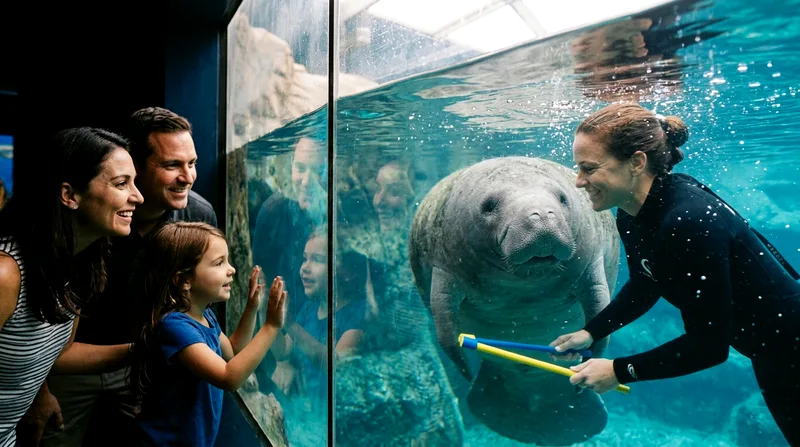
Miami Seaquarium specializes in marine life — sea lions, manatees, sharks, and other aquatic species — presented through tanks, pools, and scheduled shows rather than sprawling walking trails. Zoo Miami specializes in terrestrial wildlife across continents, with cageless, moated enclosures for animals like giraffes, elephants, and Komodo dragons spread across roughly 750 acres. One rewards families who like sitting down for a show; the other rewards families who like walking and discovering animals gradually.
Best for different age groups
Toddlers and kids under 6 generally do better at Seaquarium because the compact layout means less walking between highlights and more frequent "wow" moments in a short window. Kids aged 7 to 12 tend to get more out of Zoo Miami, since they can handle the walking and have longer attention spans for spotting animals across varied habitats. Teens often prefer Zoo Miami too, partly because it feels less like a scripted show and more like an actual expedition.
Animal Encounters and Experiences
This is where the two attractions genuinely diverge, and it's the main reason comparing them as a "Miami zoo or aquarium family" decision oversimplifies things. Seaquarium leans hard into performance and proximity — watching a sea lion show or standing close to a manatee pool delivers an immediate payoff for a 4-year-old's attention span. Zoo Miami leans into scale and discovery, letting kids notice a giraffe approaching from across a savanna-style enclosure, which is a slower kind of payoff but arguably a more memorable one for older kids.

Marine life at Seaquarium
Seaquarium's strength is aquatic species you simply won't see at a general zoo — sharks, rays, sea lions, and manatee rehabilitation exhibits tied to Florida's conservation work. Shows run on a schedule throughout the day, so plan your visit around showtimes rather than wandering randomly, or you'll miss the parts kids remember most. The downside: several exhibits are stationary tanks, which means less "activity" to watch compared to land animals that move and interact visibly.
Land animals at Zoo Miami
Zoo Miami's cageless, moat-based design means you often see animals in genuinely active behavior — elephants bathing, giraffes feeding at height, Komodo dragons basking — rather than static poses. The zoo groups animals by continent, so a day there doubles as an informal geography lesson, which European travelers in particular tend to appreciate. The trade-off is unpredictability: animals can be resting out of view in a large enclosure, and younger kids sometimes get frustrated walking 10 minutes to find "nothing happening."
Comfort Factors: Shade, Heat, and Walkability
South Florida heat is the real variable that decides whether a family has a good day or a miserable one, and it separates these two venues more than the animals do. Seaquarium's smaller footprint means less sun exposure overall and quicker access to shaded seating or indoor-adjacent areas between exhibits. Zoo Miami's size is a genuine liability in July and August — stretches of path between habitats can run several hundred yards with little canopy cover, and that adds up fast with a toddler in tow.

If you're traveling with grandparents or anyone with limited stamina, this matters more than ticket price. I'd flag Zoo Miami as a place where a rented stroller or the monorail-style tram (if running that day) isn't optional for a full visit — it's close to mandatory for anyone over 60 or under 4.
Weather protection and rest areas
Seaquarium has benches and partially covered viewing areas near most major exhibits, plus the bay breeze off Biscayne Bay, which takes the edge off midday heat more than you'd expect. Zoo Miami has rest areas too, but they're spaced farther apart given the acreage, so you can go 15-20 minutes between shaded benches in some zones. Pack a stroller with a canopy for Zoo Miami regardless of your child's age — even school-age kids tend to want to sit by hour three.
Distance and terrain for strollers
Seaquarium's paths are flat, paved, and short enough that most families can cover the whole site without a stroller if their kids are walking age. Zoo Miami's terrain is flat too, but the sheer distance — easily 3-4 miles of walking if you see everything — makes a stroller or tram ride a practical necessity rather than a comfort item. Skipping the tram at Zoo Miami to "save money" is one of the more common mistakes I'd steer families away from; the exhaustion isn't worth it.
Ticket Value and Time Investment
Neither attraction is cheap by general theme-park standards, but they sit in different value brackets once you factor in time spent. Seaquarium tickets generally run in the same mid-range tier as a single-day zoo ticket, but because the visit is shorter — often wrapped up in 3 to 4 hours — the cost per hour of engagement runs higher than Zoo Miami's. Zoo Miami, despite a comparable or slightly higher base ticket price in some seasons, stretches across 5 to 7 hours comfortably, which usually makes it the better raw value if your kids can last that long.
Cost per hour of engagement
Think in terms of dollars per hour rather than the sticker price alone. A family paying a similar admission fee at both venues gets roughly half the time at Seaquarium compared to Zoo Miami, which tilts raw value toward the zoo for budget-conscious travelers. That said, if your toddler burns out after 90 minutes anywhere, paying for 7 hours of zoo access you won't use isn't actually a better deal — it just looks like one on paper.
How long to spend at each
Budget 3 to 4 hours for Seaquarium, including show times — arrive 30 minutes before the first scheduled show to get seating. Budget a half-day, realistically 5 to 7 hours, for a thorough Zoo Miami visit, or commit to seeing only half the zoo in 3 hours if that's more realistic for your group's stamina. Trying to "do" Zoo Miami in under 3 hours usually means missing entire continental zones, which defeats the point of going.
Who Should Choose Which Attraction
The best animal attraction in Miami for kids really depends on who's in your group and how your day is structured around other Miami plans — a Wynwood mural walk, a Biscayne Bay boat tour, or a day trip toward the Florida Keys. Neither venue is a bad choice; they just serve different trip shapes.
Seaquarium is ideal for...
Choose Seaquarium if you have toddlers or kids under 7, a half-day window rather than a full day, or you're pairing the visit with something else in the same afternoon, like a Biscayne Bay boat tour or South Beach time. It's also the better call for families with a napper in the group, since you can realistically be in and out before a midday meltdown sets in. Anglers and boaters already spending a day on Biscayne Bay will find Seaquarium an easy add-on given its Virginia Key location.
Zoo Miami is ideal for...
Choose Zoo Miami if your kids are 6 or older, you have a full day free, and your group can handle heat and distance with proper planning — water bottles, sunscreen, and a tram ticket. It's also the stronger pick for families who've already done Orlando's theme parks and want something less manufactured, or for European travelers used to walkable zoos like those in London or Berlin. I'd steer families away from Zoo Miami on a day when temperatures are forecast above 90°F with a toddler who refuses strollers — that combination rarely ends well.
Can You Do Both?
You can do both, but not comfortably on the same day with young kids — they're roughly 25-30 minutes apart by car, on opposite sides of the city, and each deserves its own energy budget. A more realistic plan for a multi-day Miami trip is Seaquarium on a lighter day (maybe paired with a Biscayne Bay cruise) and Zoo Miami on a day with no other major activity planned, ideally starting at opening to beat both the heat and the crowds.
Compared to combining attractions in Orlando, where parks are designed for back-to-back days, Miami's two animal attractions sit far enough apart geographically that stacking them feels like two separate day trips rather than one easy loop. If you're only in Miami for a short stay and weighing this against other regional options — a Key West day trip, a Fort Lauderdale beach day, or an Everglades tour — I'd rank Zoo Miami and Seaquarium as a split priority: pick one for this trip, and save the other for a return visit rather than rushing both.
Frequently asked questions
Is Miami Seaquarium or Zoo Miami better for toddlers?
Seaquarium is generally better for toddlers because the site is compact, shows are frequent, and there's less walking between exhibits. Zoo Miami's scale works against very young kids, who tend to tire out before covering even half the grounds.
How long should you spend at each attraction?
Plan 3 to 4 hours at Seaquarium, built around show times, and 5 to 7 hours at Zoo Miami if you want to see most of it. A rushed 2-hour Zoo Miami visit will only cover a fraction of the habitats.
Which venue has more shade and indoor areas?
Seaquarium has proportionally more shaded seating and benefits from bay breeze off Biscayne Bay, making midday heat more manageable. Zoo Miami has rest areas too, but they're spread farther apart given its much larger footprint.
Can you visit both in one day?
Technically yes, since they're about 25-30 minutes apart by car, but it's not advisable with young kids — each venue needs several hours to be worthwhile. Most families get better results splitting them across two separate days of a Miami trip.
What's the best time to visit to avoid crowds?
Arrive at opening on weekdays for both attractions, and avoid school holiday weeks and weekend mornings when local families visit. Early arrival at Zoo Miami also means cooler temperatures for the first couple of hours of walking.