Find the best Miami deep-sea fishing charter for your trip. Compare half-day and full-day options by species, boat size, and typical pricing before you book.
Who Should Book a Miami Deep-Sea Fishing Charter
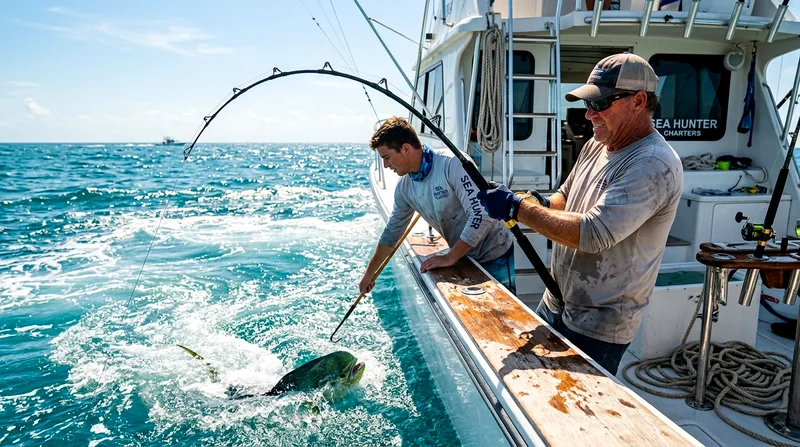
Miami sits a short run from the Gulf Stream, a warm current that pushes close to shore here compared to almost anywhere else in the continental U.S. That proximity is the whole pitch: boats can reach blue water and real offshore species in 30 to 60 minutes, rather than the two-hour slog common out of places like Tampa or Naples. If you've fished the Gulf side of Florida and found it flat and slow, Miami's Atlantic access is a different animal entirely.
That said, a Miami deep-sea fishing charter isn't the right call for everyone. Anyone who gets seasick easily should think hard before booking a full-day offshore trip — the swells past the reef line can run 3 to 5 feet even on calm days, and there's no quick way back to the dock once you're 20 miles out. If that's a concern, a half-day nearshore trip or a calmer Biscayne Bay charter targeting snapper and bonefish is the smarter starting point.
Families with young kids under eight generally do better on bay or nearshore trips too. Offshore charters involve real waiting — trolling for an hour between bites isn't unusual — and small kids lose patience fast. Older kids, teenagers, and adults with reasonable stamina get the most out of true deep-sea trips.
Experienced Anglers Targeting Trophy Species
If you've fished before and want a real shot at sailfish, blue marlin, or wahoo, book a private full-day charter and say so explicitly when you inquire. Captains tailor bait, trolling speed, and location based on what you tell them you want — a boat running mixed-bag trips for casual groups won't be rigging ballyhoo for marlin the same way a dedicated sportfishing captain will. Winter months (roughly December through March) are peak sailfish season off Miami, and that's when serious anglers should prioritize booking early, since the better boats fill up weeks ahead on good weather windows.
First-Time Deep-Sea Fishers and Families
A shared half-day charter is the low-risk entry point. You're typically out four hours, targeting mahi-mahi, kingfish, grouper, or snapper depending on season, and you split the boat cost with other passengers, which keeps per-person prices down. Crews on these trips are used to beginners — they'll bait hooks, explain drag settings, and net fish for you. It's a reasonable way to find out if deep-sea fishing is something you actually enjoy before committing to a longer, pricier full-day trip targeting bigger game.
Types of Miami Charter Fishing Boats Compared
Not all Miami charter fishing boats operate the same way, and the difference between a shared trip and a private one changes almost everything about your day — who you fish alongside, how much attention you get from the crew, and what you can realistically target.
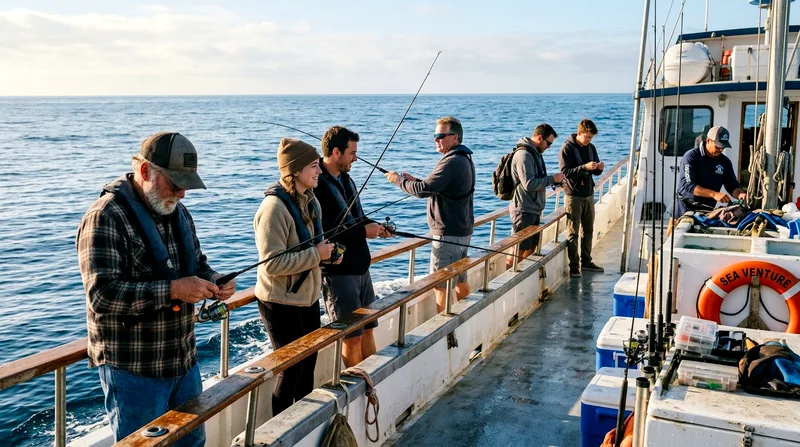
Shared half-day trips suit casual anglers and budgets, while private full-day charters are built for serious offshore species like marlin and tuna.
Miami fishing charter types compared by duration, species, and group size
| Charter Type | Typical Duration | Boat Capacity | Common Target Species | Best For |
|---|---|---|---|---|
| Bay/nearshore shared | 3-4 hours | 6-20 people | Snapper, bonefish, tarpon | Families, beginners, calm water |
| Offshore shared half-day | 4 hours | 10-30 people | Mahi-mahi, kingfish, grouper | Budget-conscious first-timers |
| Offshore shared full-day | 8+ hours | 10-30 people | Tuna, wahoo, grouper | Experienced anglers on a budget |
| Private half-day | 4 hours | 2-6 people | Grouper, snapper, mahi-mahi | Small groups, couples |
| Private full-day | 8-10 hours | 2-6 people | Marlin, tuna, wahoo, sailfish | Trophy-species anglers, groups splitting cost |
Typical figures based on standard Miami charter practices; exact durations, capacities, and included species vary by operator and season, so confirm before booking.
Shared Group Charters vs. Private Boats
Shared charters — sometimes called "party boats" or open-boat trips — put you on a larger vessel with other paying passengers, often 10 to 30 people depending on the boat. You pay per person, there's a fixed departure time, and you fish a stretch of reef or wreck the captain picks for the group. It's the cheapest way onto the water and a fine option for solo travelers or couples who don't want to fund an entire boat.
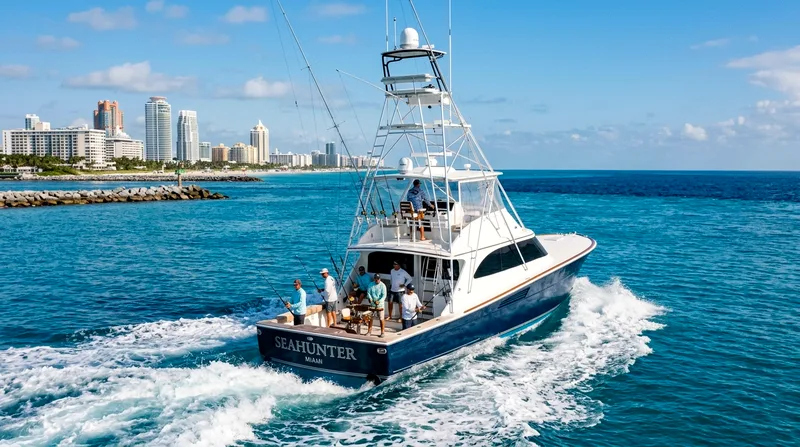
Private charters mean you book the whole vessel — typically a 28 to 45-foot sportfisher — for your group alone, whether that's two people or eight. You set the agenda more: target species, how long to stay in one spot, whether to troll or bottom fish. Private boats cost more per trip but often work out cheaper per person for a group of four to six splitting the cost, and the experience is far more personalized. The trade-off is flexibility around scheduling and species — don't expect a budget shared boat to chase blue marlin 40 miles out; that's private-charter territory.
Target Species by Boat Type and Range
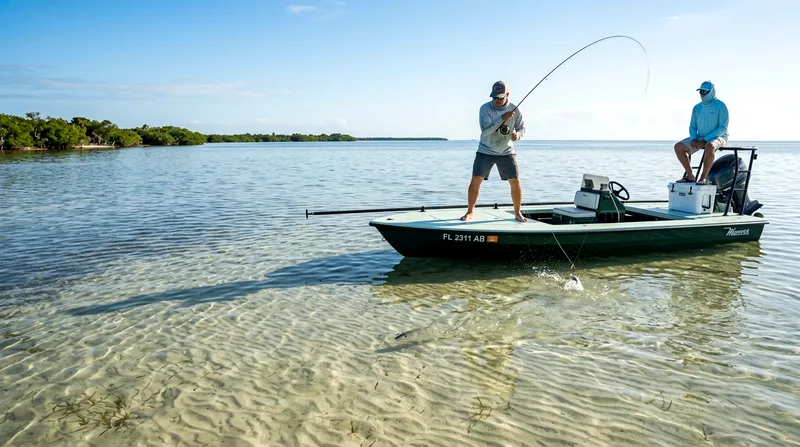
Nearshore and bay trips around Biscayne Bay typically land snapper, snook, bonefish, and tarpon — good light-tackle fishing, calmer water, shorter runs. Offshore half-day trips reach the reef edge and sometimes the Gulf Stream itself, producing mahi-mahi, kingfish, and occasional sailfish in season. Full-day offshore and private charters push further into the Gulf Stream and beyond, where wahoo, tuna, grouper, and marlin become realistic targets. Key Largo, about an hour south, is another launch point some anglers compare against Miami — its reef structure is excellent for grouper and snapper, though it lacks Miami's quick Gulf Stream access for pelagic species like tuna and marlin.
Key Factors When Booking Your Miami Fishing Charter
Price is the first thing most people check, but it's not the most useful filter. Two boats charging similar rates can offer very different trips once you look at what's actually included.
Inclusions, Group Size, and Cancellation Policies
Most reputable charters include rods, reels, bait, and tackle in the base price — if a listing doesn't mention this, ask before booking. Fuel surcharges are common on longer offshore runs and sometimes get added separately, so confirm the total cost up front rather than assuming the quoted price is final. Food and drinks are often bring-your-own; check whether coolers and ice are provided.
Group size matters more on shared boats. A boat capped at 6 anglers gives you meaningfully more rod time than one packing in 20. Cancellation policies vary widely — some operators offer full refunds for weather cancellations (reasonable and standard), while others only offer rescheduling credit. Read this before you pay a deposit, since Miami's afternoon thunderstorms in summer cause more last-minute cancellations than many visitors expect.
Licensing, Gear, and Safety Requirements
Florida requires a saltwater fishing license for anyone fishing recreationally, but nearly all licensed charter operators cover this under their vessel's blanket license — meaning you don't need to buy one separately if you're fishing from a licensed charter boat. Confirm this when booking rather than assuming it. Bring polarized sunglasses, reef-safe sunscreen, a hat, and non-slip shoes; seasickness medication taken the night before is worth it even if you've never had motion sickness, since Atlantic swells offshore are a different experience than flat bay water. On the safety side, ask whether the boat carries standard Coast Guard-required safety equipment and liability insurance — established operators will answer this without hesitation; vague or defensive answers are a reason to look elsewhere.
Half-Day vs. Full-Day Miami Fishing Trips
This is the single biggest decision after shared-versus-private, and it affects both your budget and what ends up on your line.
Duration, Distance, and Species Availability
Half-day trips typically run four hours and stay closer to shore, reaching reef structure and the inner edge of the Gulf Stream. You'll likely target snapper, grouper, kingfish, and mahi-mahi depending on the season. Full-day trips run eight hours or more, travel further into the Gulf Stream, and open up the bigger pelagic species — tuna, wahoo, and a real shot at marlin. The extra distance and trolling time is what makes trophy fish possible; it's simply not realistic on a four-hour run.
Cost Comparison and Angler Experience Level
Half-day shared trips are the most budget-friendly entry point into Miami sport fishing, with full-day private charters for small groups costing several times more. Per-person cost on a full-day private boat drops significantly as group size grows, which is why four to six anglers splitting one boat often makes more financial sense than two people booking separately on two different half-day trips. Beginners and casual travelers get good value from half-day trips; anglers chasing a specific trophy species should budget for full-day, and ideally private, charters. Always compare current prices and recent reviews before booking — rates shift with season and fuel costs, and reviews reveal a lot about crew attitude toward beginners versus serious anglers.
Best Time to Book Your Miami Deep-Sea Fishing Charter
Sailfish season runs roughly December through March, when cooler water pushes bait and sails closer to shore — this is the best window for anglers specifically chasing sailfish, and it's also peak booking season, so reserve a boat at least two to three weeks ahead if you have specific dates. Dolphin (mahi-mahi) fishing picks up in spring, typically April through June, and tends to be more consistent for casual trips. Summer (June through September) brings calmer mornings but also Miami's daily afternoon thunderstorm pattern — book morning departures, not afternoon ones, and build a weather buffer day into your itinerary if fishing is a priority rather than a add-on activity.
Compared to booking a charter out of Fort Lauderdale, Miami's options are deeper and more varied, simply because the city has more marinas and a longer-established charter fleet. The Bahamas offers clearer water for sight-fishing and bonefishing but requires a flight or boat crossing, which doesn't make sense for a single day trip. If fishing is one activity among several on a Miami visit — alongside, say, a Biscayne Bay boat tour or an Everglades airboat ride — booking a half-day morning charter leaves your afternoon free, which is the scheduling approach most first-time visitors find works best.
Frequently asked questions
What species can I catch on a Miami deep-sea fishing charter?
Depending on season and how far offshore you go, common catches include mahi-mahi, kingfish, grouper, and snapper on half-day trips, with wahoo, tuna, sailfish, and occasionally blue marlin possible on full-day trips that reach further into the Gulf Stream. Species availability shifts by month, so ask the operator what's actually running before you book if you have a specific fish in mind.
How much does a Miami fishing charter cost?
Shared half-day trips are the most affordable option, with private full-day charters costing several times more per boat, though the per-person cost drops as group size increases. Prices vary by boat size, season, and fuel surcharges, so check current listings and confirm what's included before paying a deposit.
Do I need a fishing license for a charter trip?
Usually not separately — most licensed Miami charter boats operate under a vessel license that covers everyone fishing aboard. Confirm this directly with the operator when booking, since the rule depends on the boat holding a valid Florida charter license.
What is included in a typical fishing charter package?
Rods, reels, bait, and tackle are standard inclusions on most charters. Ice and coolers are sometimes provided; food, drinks, and sunscreen typically aren't. Fuel surcharges on longer offshore runs are sometimes billed separately, so ask for the full price breakdown before you pay.
When is the best season for deep-sea fishing in Miami?
Winter (December through March) is prime for sailfish, spring (April through June) is strong for mahi-mahi, and summer brings calmer mornings but a higher chance of afternoon storms disrupting full-day trips. Book winter trips several weeks ahead, since good-weather dates fill fast during sailfish season.