Planning to buy Vizcaya Museum tickets? Compare skip-the-line options, guided tours, entry prices, and the best times to visit this Miami estate.
What Is Vizcaya Museum & Gardens
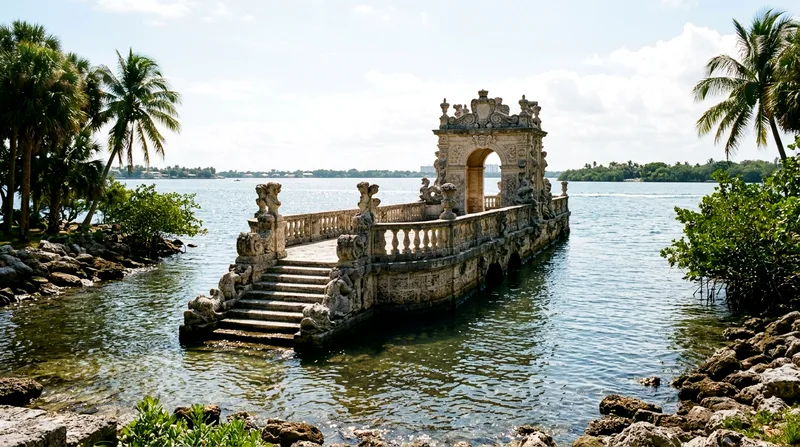
Vizcaya Museum & Gardens sits on Biscayne Bay in Miami's Coconut Grove neighborhood, built between 1914 and 1922 as the winter residence of industrialist James Deering. It's an odd, wonderful thing to find in a tropical city: a European-style villa with ten acres of formal gardens, stone fountains, and a limestone barge jutting into the bay, all surrounded by palm trees and mangrove. If you're buying Vizcaya Museum tickets expecting a typical house museum, recalibrate — this is closer to visiting a European estate that happened to land in South Florida.
The main house holds about 70,000 square feet across more than 30 furnished rooms, filled with European antiques, tapestries, and decorative art Deering collected during his travels. The grounds are now a National Historic Landmark, and the whole property functions as both a museum and a working garden, with horticulture staff maintaining the hedges and fountains daily.
Architecture and design highlights
The villa itself blends Italian Renaissance and Baroque elements with Mediterranean Revival touches — not a pure historical copy, but a stylized interpretation designed by architect F. Burrall Hoffman with interiors by Paul Chalfin. The real showpiece for garden lovers is the landscape design by Colombian-born landscape architect Diego Suarez, who laid out the formal gardens in a style borrowed from Italian villas, with clipped hedges, stone urns, and sightlines that frame the bay. Walk the East Loggia facing the water and you'll see why Deering positioned the house the way he did — the open-air room was designed as a transition between interior grandeur and the bay itself, which doubled as the property's front door for boats arriving from Miami.
Why it appeals to luxury travelers
Vizcaya isn't flashy in the way South Beach hotels are flashy, but it has a quieter kind of prestige — the kind built on provenance, craftsmanship, and a sense of permanence. Collectors of antiques, architecture buffs, and anyone who's toured villas in the Veneto or along the Amalfi Coast will recognize the reference points immediately. It's also one of the few Miami attractions genuinely suited to a half-day of slow, considered looking rather than fast consumption — a good counterpoint if your trip otherwise includes beach clubs and nightlife.
How to Visit: Independent vs. Guided Tours
Most visitors choose between walking the estate on their own with a map or audio guide, or joining a guided tour focused on either the house or the gardens. Both work, but they serve different kinds of travelers, and the choice affects how much you'll actually absorb.
Self-guided exploration
Self-guided visits are the default with standard admission and give you full control over pacing — useful if you want to linger in the gardens for photography or skip rooms that don't interest you. An audio guide is typically included or available for a small add-on fee and covers the main house reasonably well, though it moves fast through the garden's horticultural detail. Budget 90 minutes minimum, two hours if you want to see both the house and walk the full garden grounds down to the waterfront. The downside: without a docent, you'll miss a lot of the context behind specific rooms, Deering's personal history, and why certain European pieces ended up in a Florida villa.
Curated garden and architecture tours
Guided tours — sometimes run by museum docents, sometimes offered through third-party Miami tour operators bundling Vizcaya with other Coconut Grove stops — go deeper into the architecture and planting design than a self-guided walk ever will. A dedicated garden tour will explain Diego Suarez's design logic, the symbolism in the fountains, and how the hedges are maintained to Renaissance-era patterns. A house tour tends to focus on Deering's biography, the Chalfin interiors, and the social history of the estate in the 1920s. If architecture and landscape design are the reason you're visiting Miami's cultural sites at all, a guided tour is worth the extra cost — expect it to add meaningfully to your visit time, often 45–60 minutes beyond self-guided pacing. Compare current guided tour options and prices before you book, since availability and specific themes change seasonally.
Tickets & Entry Options
Vizcaya Museum tickets are sold as timed entry, which means you select an arrival window rather than a specific tour time — you can then explore at your own pace once inside. This system keeps the main house from getting overcrowded, since room capacity is limited, but it does mean weekend afternoon slots sell out, especially around holidays and during Miami's high season from December through April.
Standard timed-entry tickets suit most visitors, while guided tours and gardens-only passes serve narrower needs.
Vizcaya Museum tickets compared: entry types, cost range, and who they suit
| Ticket Type | Typical Price (USD) | Time Needed | Best For |
|---|---|---|---|
| Standard admission (house + gardens) | $25–$30 | 90–120 min | First-time visitors |
| Skip-the-line timed entry | $25–$30 (same, booked ahead) | 90–120 min | Weekend or peak-season visits |
| Guided garden tour add-on | Varies, check at booking | +45–60 min | Landscape design enthusiasts |
| Guided house tour add-on | Varies, check at booking | +45–60 min | History and architecture fans |
| Gardens-only entry (seasonal) | Lower than full admission | 60–90 min | Photography-focused, budget visits |
Prices are approximate and change periodically; confirm current admission and tour pricing on the official booking page before purchase.
Standard admission and pricing
Standard adult admission generally falls in the $25–$30 range, with reduced pricing for seniors, students, and children, and free entry for young children under a set age (typically 6 and under). Vizcaya Gardens entry price alone — for visitors who only want the grounds, not the house interior — is occasionally offered at a lower tier, though this varies by season and isn't always available, so check what's included when you book. Parking is on-site and usually carries a modest separate fee. Always confirm exact current pricing on the official booking page, since museum admission rates are adjusted periodically.
Skip-the-line and advance booking
Buying ahead is the practical move here. Vizcaya Museum skip-the-line tickets, booked through the official site or a reputable third-party platform, guarantee your timed slot and avoid the walk-up line that can form at the gatehouse entrance on weekend mornings. If you're visiting during peak season or on a Saturday, book at least 3–5 days ahead; for a weekday visit in shoulder season (May, September, October), next-day booking is usually fine. One caution: some third-party resellers mark up tickets well above face value for the same timed-entry product — cross-check the official museum site's price before paying a premium elsewhere.
Best Time to Visit
Timing your Vizcaya visit matters more than at most Miami attractions, because so much of the experience happens outdoors in direct sun with very little shade.

Seasonal considerations
December through April is Miami's dry season — lower humidity, less rain, and comfortable mornings in the mid-70s°F, which makes it the best stretch for garden walking. Summer (June through September) brings heavy afternoon thunderstorms and humidity that can make the unshaded garden paths genuinely uncomfortable by midday; if you're visiting then, go right at opening. Vizcaya Museum hours are typically 9:30 a.m. to 4:30 p.m., Wednesday through Monday, closed Tuesdays — confirm this before you plan around it, as the museum occasionally adjusts hours for private events or holiday closures.
Crowd patterns and weather
Arrive within the first hour of opening and you'll often have the East Loggia and water-facing terraces nearly to yourself — a real advantage for photography, since midday sun flattens the limestone detail that looks far better in soft early light. Weekends draw wedding parties and photographers (Vizcaya is a popular, if pricey, wedding venue), which can mean roped-off sections of garden. If that's a dealbreaker for you, visit on a weekday. Afternoon storms in summer roll in fast — if the sky darkens, head toward the house, since the gardens offer no real shelter.
Nearby Attractions & Add-Ons
Vizcaya's location in Coconut Grove makes it easy to pair with other stops, and most visitors underuse this — treating Vizcaya as an isolated two-hour stop instead of the anchor for a half-day or full-day itinerary.
Coconut Grove neighborhood
Coconut Grove itself is walkable from Vizcaya's entrance and worth 1–2 extra hours. CocoWalk has restaurants and shops if you want lunch after the visit, and the neighborhood's tree-lined streets around Main Highway give a sense of old Miami that's mostly been erased elsewhere in the city. Compare this to South Beach or Brickell, where the architecture is almost entirely 20th- and 21st-century glass and concrete — Coconut Grove feels older, slower, more residential. If you're staying in South Beach or Downtown, factor in a 20–30 minute drive or rideshare each way.
Other Miami cultural venues
Pair Vizcaya with the Fairchild Tropical Botanic Garden, about 15–20 minutes south, if horticulture is your main interest — Fairchild is larger and more botanically focused, while Vizcaya is about formal garden design and architecture. For art, the Pérez Art Museum Miami and Phillip and Patricia Frost Museum of Science are roughly 20 minutes north in Downtown. If you're weighing a full Miami cultural day against a side trip, Vizcaya edges out a drive to Fort Lauderdale's Bonnet House for convenience, though Bonnet House offers a similar estate-and-garden experience if you're staying further north and don't want the drive south.
Frequently asked questions
How much do Vizcaya Museum tickets cost?
Standard adult admission typically runs $25–$30, covering both the main house and gardens, with discounted rates for seniors, students, and children, and free entry for very young children. Prices are adjusted periodically, so confirm the exact current rate on the official booking page before you buy.
Can I skip the line at Vizcaya?
Yes — booking timed-entry tickets online in advance functions as the skip-the-line option here, since it avoids the walk-up queue at the gatehouse. It's most valuable on weekends, holidays, and during the December–April high season; on quiet weekday mornings, walk-up entry is usually fast anyway.
Are guided tours worth booking at Vizcaya?
If architecture or garden design is your main interest, yes — a docent-led tour explains details (Diego Suarez's landscape logic, Deering's design choices) that self-guided visits miss entirely. If you just want a pleasant walk and some photos, self-guided admission is sufficient and cheaper.
What is the best time to visit Vizcaya?
Weekday mornings right at opening, ideally between December and April, when humidity is lower and the gardens are least crowded. Avoid midday in summer — the unshaded garden paths get uncomfortably hot, and afternoon thunderstorms are common June through September.
What attractions are near Vizcaya Museum?
Coconut Grove's shops and restaurants are walkable from the entrance, and Fairchild Tropical Botanic Garden is about 15–20 minutes south by car. Downtown Miami's Pérez Art Museum and the Frost Science Museum are roughly 20 minutes north, making a combined cultural day feasible.