Everglades National Park tickets explained: entrance fees, annual passes, tram tours and ranger programs. Compare options before you book.
What Is an Everglades National Park Ticket?
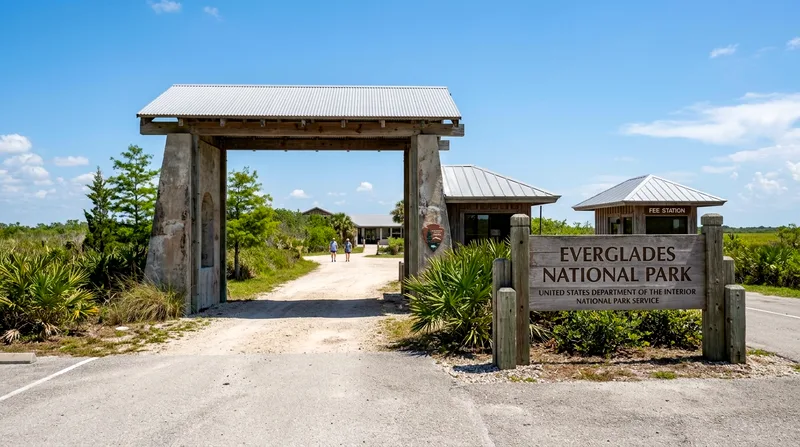
An Everglades National Park ticket is really an entrance pass — a per-vehicle or per-person fee charged by the National Park Service for access to the park's roads, trails, and visitor centers. It isn't a timed-entry ticket like you'd buy for a theme park, and there's no booking confirmation to print out. You pay at an entrance station or kiosk, or online in advance through the NPS recreation portal, and you get a paper receipt that functions as your pass for several days.
This matters because people searching "Everglades National Park tickets" often expect something closer to an Orlando park ticket — a scannable barcode tied to a specific date and time slot. That's not how this park works. The Everglades is over 1.5 million acres of wetland, and the NPS treats entry more like a national forest fee than an attraction ticket. If you've bought passes for Zion or Yellowstone before, the system will feel familiar.
One genuine frustration: the park has multiple entrances that are not connected by road, and each charges its own entrance fee separately. Drive in at the main Ernest Coe entrance near Florida City, then decide you also want to see Shark Valley off Tamiami Trail, and you'll pay again at Shark Valley — it's administered differently and issues its own receipt. Plan your route before you leave Miami, because backtracking across the park to "use" a ticket you already paid for elsewhere isn't possible; the roads don't connect.
Park entry pass explained
The standard entrance fee is charged per vehicle and is generally cheaper than you'd expect for a national park this size — it's typically well under the cost of a single Orlando theme park ticket, though exact figures should be confirmed on nps.gov since the NPS periodically adjusts fee schedules. Motorcyclists and cyclists usually pay a reduced per-person rate. There's no separate "ticket" for each trail inside the main Homestead/Flamingo section — one vehicle fee covers Anhinga Trail, Gumbo Limbo Trail, the Flamingo Visitor Center, and everything along the main park road. Keep your receipt in the car; rangers do check.
Valid entry points and duration
A standard entrance pass is valid for seven consecutive days from purchase, which surprises a lot of visitors who assume it's single-day only. That means if you're spending a week in Miami and want to return to Anhinga Trail at sunrise, then come back again two days later for a ranger talk, one receipt covers it — as long as you're re-entering through the same fee area. The main entry points are the Homestead/Ernest Coe entrance in the south, the Shark Valley entrance off Tamiami Trail to the north, and the Gulf Coast entrance near Everglades City on the west side. Each operates somewhat independently, and fee collection at Gulf Coast has at times been seasonal, so check current status before relying on it.
What's Included and Excluded
This is where a lot of pre-trip research goes wrong. People search "Everglades entrance fee" expecting it to bundle in the tram tour or an airboat ride, and it doesn't. The NPS entrance fee gets you access to the land — roads, trails, boardwalks, visitor centers, and restrooms. Anything run by a concessioner, which includes the Shark Valley tram and most airboat operations, is a separate transaction with its own line and its own price.
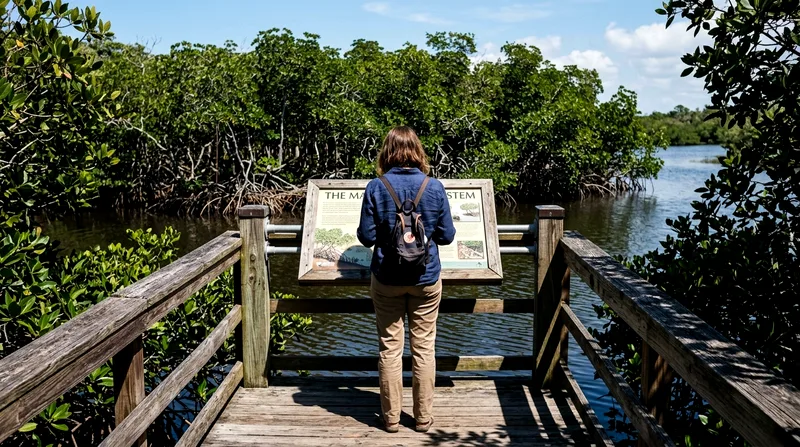
I'd rather see visitors go in knowing this than get frustrated at the Shark Valley kiosk after driving 40 minutes from Miami. The entrance fee at Shark Valley is cheap; the tram tour on top of it isn't free, and it sells out on busy winter weekends, particularly around the December-to-April peak season when Miami's snowbird crowd and European tourists overlap with Florida school holidays.
What your ticket covers
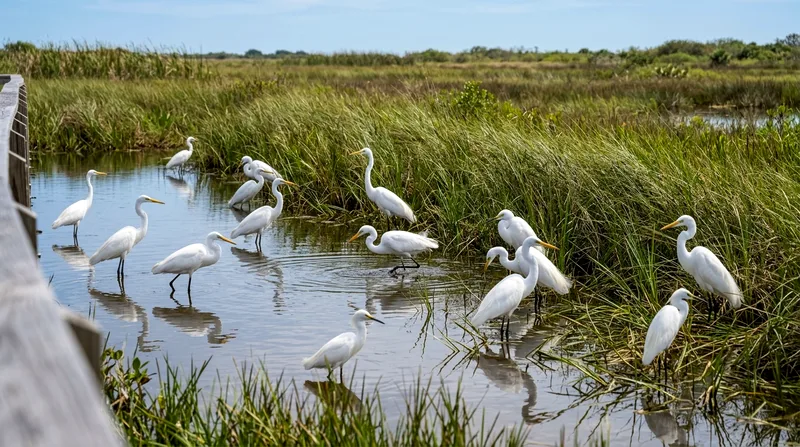
Your entrance fee covers unsupervised access to self-guided trails like Anhinga Trail and Gumbo Limbo Trail near the main entrance, the full length of the park's main road down to Flamingo, restroom and picnic facilities, and entry to visitor centers including the Ernest F. Coe Visitor Center and Flamingo Visitor Center. It also covers attendance at free ranger-led programs when they're running — these are included in your admission, not an upsell, though availability depends on staffing and season and isn't guaranteed on any given day.
Additional paid experiences
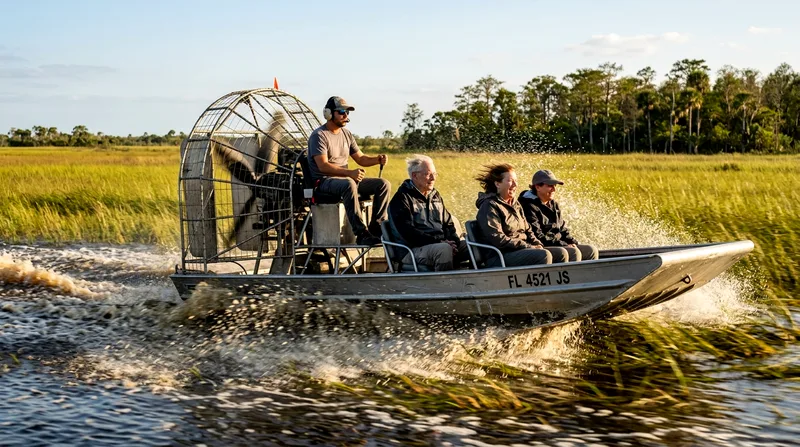
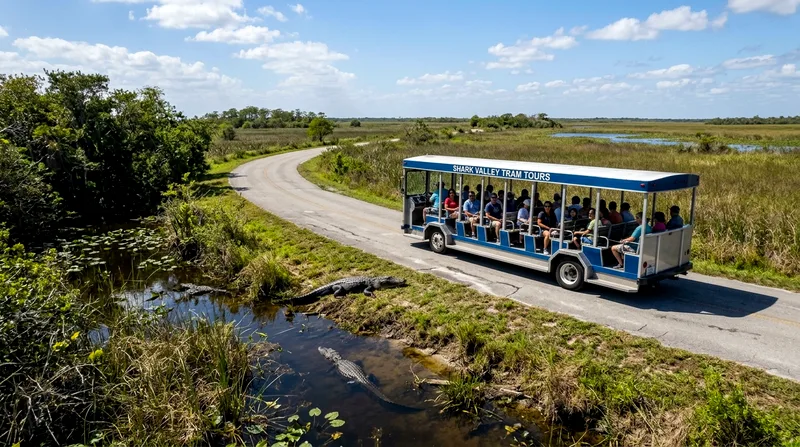
Everything with an engine or a guide attached to it usually costs extra. The Shark Valley tram tour, a two-hour narrated loop past basking alligators, is booked and paid separately from park entry — plan for this if alligator sightings are your main reason for the trip. Airboat tours are a similar story: none operate inside the main protected wilderness areas of the park itself (airboats are restricted in much of the park to protect wildlife), so most airboat rides you'll see advertised near the Tamiami Trail or in Everglades City are run by private operators on adjacent land, not NPS concessions. Canoe and kayak rentals at Flamingo, backcountry camping permits, and bike rentals at Shark Valley also carry their own fees.
Ticket and Pass Options Compared
Once you understand that entry and activities are billed separately, the real decision is which pass makes sense for how often you'll visit. A single Everglades National Park pass bought at the gate works fine for a one-off trip. But if your Florida itinerary includes other national parks — Biscayne National Park near Miami, or a wider loop through the Southeast — the America the Beautiful annual pass starts to make financial sense fast.
The America the Beautiful pass is the federal annual pass covering entrance fees at every NPS site and many other federal recreation areas nationwide, priced as a flat annual fee that's roughly the cost of three to four single-vehicle Everglades entries. It's sold at any NPS entrance station, including Everglades gates, and online through the USGS store. Seniors (62+) get a notably discounted lifetime or annual senior pass — one of the better-value purchases in the entire NPS fee system if you're a frequent park visitor.
A standard vehicle pass covers a week of entry, while the America the Beautiful annual pass pays off after a few repeat national park visits.
Everglades National Park tickets and passes compared by cost, duration, and best use
| Pass Type | Typical Cost Level | Valid For | Covers | Best For |
|---|---|---|---|---|
| Standard vehicle entrance pass | Low (single visit) | 7 consecutive days | All self-guided trails, roads, visitor centers | One-time visitors, short Miami trips |
| Motorcycle/cyclist/pedestrian pass | Lower than vehicle rate | 7 consecutive days | Same access, reduced per-person rate | Solo travelers, cyclists on Shark Valley loop |
| America the Beautiful annual pass | Moderate (flat annual fee) | 12 months | All NPS sites nationwide | Frequent visitors, multi-park Florida trips |
| Senior annual/lifetime pass (62+) | Low, heavily discounted | 12 months or lifetime | All NPS sites nationwide | Senior travelers visiting parks regularly |
| Shark Valley tram tour | Separate paid add-on | Single 2-hour tour | Narrated loop tour, wildlife viewing | Families, first-timers wanting guaranteed gator sightings |
| Ranger-led programs | Free with entrance fee | Single session | Guided walks/talks, seasonal availability | Budget-conscious visitors, those with flexible schedules |
Typical figures based on standard NPS fee structures; exact prices and seasonal tram schedules change, so confirm on nps.gov before you go.
Day pass vs. annual pass
If you're doing one trip to the Everglades and nothing else, buy the standard seven-day vehicle pass at the entrance — don't bother with the annual pass just to save a few dollars. But if you're a Florida regular, a snowbird spending winters near Naples or Fort Lauderdale, or planning to also hit Biscayne National Park, Dry Tortugas near Key West, or any national park elsewhere in the country within twelve months, the America the Beautiful annual pass pays for itself after about three to four visits. Seniors should specifically ask about the senior annual or lifetime pass rather than defaulting to the standard annual pass — the price difference is substantial.
Tram tours and ranger programs
Tram tours at Shark Valley run on a set schedule and are the single most popular paid add-on in the park — book these directly, as they do sell out during peak winter months. Ranger-led programs, by contrast, are free with your entrance fee but run on a much less predictable schedule; some are seasonal, some are daily in winter and suspended in summer's heat and storm season. Check the visitor center schedule board or the park's website the week of your visit rather than planning your whole day around a ranger walk that may not be running.
Where and How to Buy Tickets
Buying "how to buy Everglades tickets" correctly mostly means buying directly from the National Park Service and ignoring third-party sites that mark up a fee the NPS charges at face value. There's no booking fee advantage to buying ahead for standard entrance — you can pay cash or card right at the gate kiosk at Ernest Coe or Shark Valley, and lines are rarely long outside of peak holiday weekends.
Where advance planning actually matters is the Shark Valley tram tour and any backcountry permits for camping or canoeing — those have limited capacity and should be arranged ahead through official NPS or concessioner channels, not assumed to be available walk-up.
Official booking channels
The park's own site, nps.gov/ever, is the authoritative source for current entrance fees, seasonal closures, and which entrances are staffed on a given day. The America the Beautiful annual pass can be bought online through the USGS store or in person at any entrance station. For tram tours, go through the official Shark Valley concessioner booking line listed on the NPS site rather than a generic travel booking aggregator — you'll pay the same or less, and you'll get accurate scheduling instead of a reseller's estimate.
Best time to purchase
For standard entrance, buy at the gate the day you arrive — there's no benefit to pre-purchase and no risk of "selling out." For the Shark Valley tram, book a few days ahead during peak season (December through April), when Miami's tourist season overlaps with the Everglades' dry season and best wildlife visibility. In the off-season — the hot, buggy, and rainier months from June through September — walk-up availability for everything, including trams, is much more relaxed, though some facilities reduce hours and mosquitoes become a genuinely significant factor in trail comfort.
Is It Worth It? By Visitor Type
Whether an Everglades ticket is worth the money depends entirely on what you're comparing it to. Against a day at an Orlando theme park, it's a bargain — a fraction of the price for a genuinely different kind of day, with real wildlife instead of costumed characters. Against a half-day in Key West or a beach day in Fort Lauderdale, it's a different trade entirely: you're paying less, but you need a car, sun protection, and realistic expectations about heat and insects, especially in summer.
For first-time visitors
If this is your first trip, pay the standard entrance fee at Ernest Coe, walk Anhinga Trail (flat, short, and reliably full of alligators and wading birds close to the boardwalk), then decide if you have time to also drive the hour-plus to Shark Valley for the tram. Trying to do both entrances in one day from Miami is possible but tight — budget a full day, leave before 9 a.m., and don't plan dinner reservations back in South Beach for that evening. Families with young kids should prioritize Anhinga Trail over the tram; it's shorter, free beyond entry, and keeps attention spans intact.
For frequent explorers
Anglers, photographers, and repeat visitors get far more value from the America the Beautiful annual pass than from paying per-visit, especially if you're also fishing the backcountry (which requires its own separate permit, not covered by entrance fees) or combining Everglades trips with Biscayne National Park just outside Miami. Serious birders and wildlife photographers should also budget separately for ranger-led programs and talk to visitor center staff about current conditions — water levels and animal activity shift enough season to season that the same trail can look completely different in January versus August.
Frequently asked questions
How much does it cost to enter Everglades National Park?
The standard per-vehicle entrance fee is generally inexpensive compared to most paid attractions in Florida, and it's valid for seven consecutive days. Motorcyclists, cyclists, and pedestrians pay a reduced per-person rate. Fees can change, so confirm the current amount on nps.gov/ever before you go rather than relying on older published figures.
Can I buy an annual pass for Everglades?
Yes, but it's not Everglades-specific — the America the Beautiful annual pass covers entrance to the Everglades plus every other NPS site and many federal recreation areas nationwide. It's sold at Everglades entrance stations and online through the USGS store. Seniors aged 62 and up should ask about the discounted senior annual or lifetime pass instead.
Are tram tours included with park admission?
No. The Shark Valley tram tour is operated by a park concessioner and billed separately from your NPS entrance fee. You'll pay the standard vehicle entrance fee at the Shark Valley gate, then pay again for a seat on the tram tour itself, which should be booked through official channels, especially in peak winter months.
Where can I book Everglades tickets online?
Book standard entrance info and annual passes through nps.gov/ever and the official USGS America the Beautiful pass store. For the Shark Valley tram tour, use the concessioner's official booking line linked from the NPS site rather than third-party travel resellers, which often charge more for the same tour.
Do children need tickets for Everglades National Park?
There's no separate child ticket — the standard fee is charged per vehicle, so kids ride in free as part of that single payment. If you're entering on foot, bike, or as a walk-up at a reduced per-person rate, check current NPS policy on child age cutoffs for that specific rate category.