Planning a Miami jet ski rental? Compare prices, safety rules, and official booking options in Miami Beach and Virginia Key before you ride.
What Is a Jet Ski Rental in Miami?
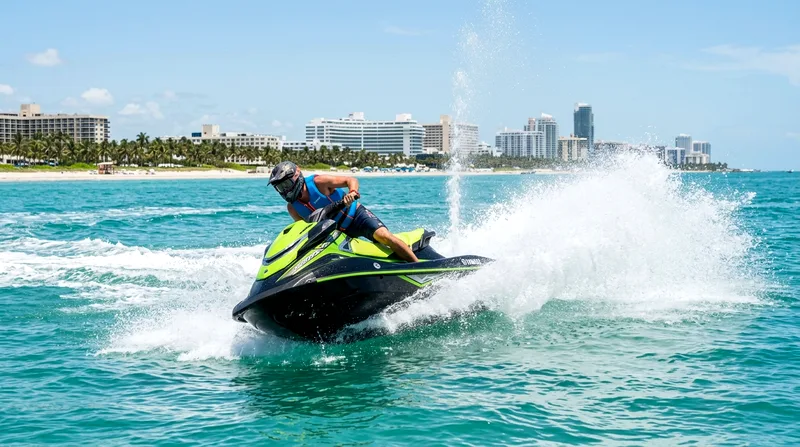
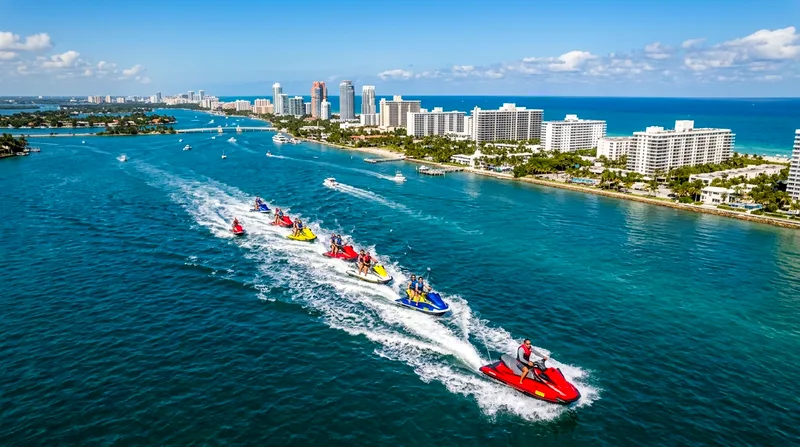
A Miami jet ski rental is exactly what it sounds like — you pay an operator to use a personal watercraft for a set block of time, usually launching from a marina along Miami Beach, Virginia Key, or the docks fringing Biscayne Bay. Most riders go out in pairs or small groups, following a set route that loops past the MacArthur Causeway, Star Island, or the calmer flats near Virginia Key Beach Park, where the water is more sheltered than the open ocean side of South Beach.
This isn't a casual, walk-up activity the way renting a beach chair is. Florida treats personal watercraft as vessels under state law, which means operators are required to verify ID, collect signed liability waivers, and in many cases run a short on-water safety briefing before releasing you. The Florida Fish and Wildlife Conservation Commission (FWC) regulates personal watercraft operation statewide, and local operators coordinate with U.S. Coast Guard rules on life jacket use and reckless operation. If a company skips any of that, treat it as a red flag rather than a time-saver.
I'd steer most first-timers toward operators based out of Virginia Key over the packed stretches near South Beach proper — the launch areas are less congested, the water's calmer for learning throttle control, and you're not dodging as much recreational boat traffic in the first ten minutes. It's a less flashy launch point, but it's a better one if you've never ridden before.
Solo vs. tandem rentals
Solo rentals mean one rider per jet ski, which most operators require to be at least 18 with a valid driver's license — more on age rules below. Tandem rentals let a second person ride as a passenger, which works well for couples or a parent riding with an older child, but understand that the licensed operator still controls the throttle and steering; passengers don't get a turn mid-ride on most liability policies. Renting two solo jet skis instead of one tandem costs more — often close to double — but it means everyone actually gets to drive, which is usually the point of the trip for anyone past age ten or eleven.
Duration options explained
Operators typically sell time in blocks: 30 minutes, one hour, two hours, and half-day packages of three to four hours. Thirty-minute rentals exist mostly as a taster for nervous first-timers or families with a child riding tandem, but honestly, by the time you've had the safety briefing and found your bearings, you're nearly out of time. An hour is the realistic minimum for anyone who wants to actually enjoy open water beyond the no-wake zone. If you're coming from Fort Lauderdale or staying near Brickell and making a special trip out to the water, budget for at least a two-hour block — shorter rentals rarely feel worth the drive and parking hassle.
What's Included and What Isn't
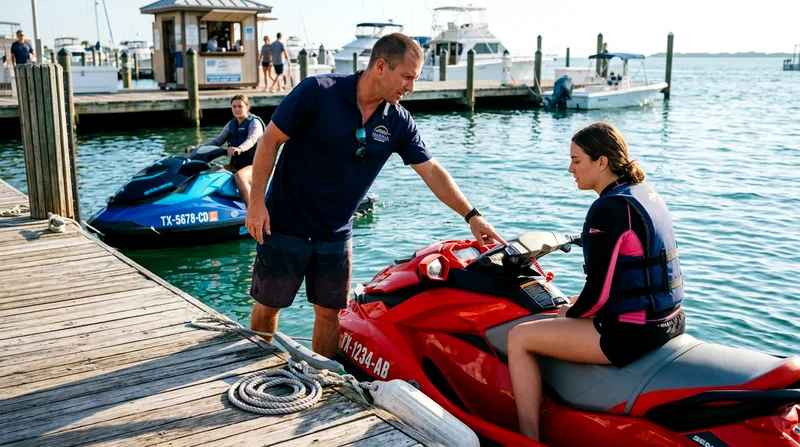
Every legitimate Miami jet ski rental includes the watercraft, fuel to start, a life jacket, and a mandatory safety orientation — usually a five-to-ten-minute rundown covering throttle control, no-wake zones, and hand signals if you're riding in a group. What's rarely included: helmets (most personal watercraft operators in Florida don't require them, unlike some states), snacks or water, waterproof phone cases, and transportation to the marina.
Where rentals differ most is in the extras bundled into the price. Some operators throw in a guided tour with a lead boat; others hand you a laminated map and a radio and send you off self-guided within a marked zone. A few upsell photo packages — a staff member shoots footage from a chase boat and sells you the clips afterward, typically $20-$40 extra. Skip this unless you really want it; a waterproof phone pouch clipped to your life jacket does the same job for free.
Safety gear and insurance
Coast Guard-approved life jackets are mandatory and operators will not let you launch without one — don't fight this, and don't assume your own life jacket from home counts if it's not rated correctly. Insurance coverage varies a lot by operator. Some rentals include basic liability coverage in the base price; others sell a damage waiver as an add-on, often $15-$30 per rental, that caps your out-of-pocket cost if you scratch the hull or damage the engine. Read this section of the contract closely — without a waiver, you could be on the hook for repair costs running into the thousands if something goes wrong. This is the single most overlooked part of booking, and it's worth the extra $20.
Fuel, deposits, and extra fees
Most operators require a credit card hold as a security deposit, commonly in the $200-$500 range, released within a few business days if the jet ski comes back undamaged and fueled to the agreed level. Fuel policies vary: some rentals are "full-to-full," meaning you return it with a full tank or pay a refueling surcharge; others bake an estimated fuel cost into the base price. Ask which model applies before you sign — it changes your real cost. Tax, a marina or launch fee, and sometimes a mandatory guide fee for self-guided routes through Biscayne Bay can add another 10-15% on top of the advertised rate, so the number you see online is rarely the number you actually pay.
Rental Options and Pricing Comparison
Miami jet ski prices follow a fairly predictable structure across operators, even though exact numbers shift with season and fuel costs. As a rough guide, expect approximate rates of $100-$150 for a 30-minute to one-hour solo rental, $200-$280 for a two-hour block, and $300-$450 for a half-day guided tour for two riders — these are widely published ranges, not fixed quotes, so confirm current pricing directly with the operator before booking. Weekends and holidays run higher than weekday mornings, and summer (peak heat, calmer mornings) typically sees more operators at full capacity than winter.
Compare that to Key West, where jet ski tours tend to run slightly cheaper per hour but cover less interesting scenery than Biscayne Bay's skyline backdrop, or Cancun, where jet ski rentals are often bundled cheaply into all-inclusive resort packages but with far less oversight on safety briefings. Miami sits in the middle: pricier than the Caribbean, but with tighter regulation and better-maintained equipment on average than you'll find at a budget resort dock.
Rental length and group size drive the price far more than which marina you choose.
Miami jet ski rental options compared by duration, price, and best use
| Rental Type | Typical Duration | Approx. Price Range | Best For |
|---|---|---|---|
| Taster rental | 30 min | $100-$150 | Nervous first-timers, tandem riders |
| Standard solo | 1 hour | $120-$180 | Solo riders, couples wanting independence |
| Extended ride | 2 hours | $200-$280 | Thrill-seekers, photographers |
| Half-day guided tour | 3-4 hours | $300-$450 | Groups, special-occasion trips |
| Tandem rental | 1 hour | $150-$220 | Parent-and-child, non-driving passengers |
Typical published ranges; confirm exact current pricing and fees directly with the operator before booking.
Hourly vs. half-day packages
Hourly rentals suit people who want a quick adrenaline hit between other Miami plans — maybe before an evening in Wynwood or after a morning at South Beach. Half-day packages make more sense if jet skiing is the main event of your day, since they usually include a longer guided route past Star Island, Fisher Island, or out toward the calmer channels near Virginia Key, with a break partway through. Per-hour, half-day packages are cheaper, but the total spend is obviously higher — don't book one assuming you'll want four hours on a jet ski unless you've ridden before. Two hours is plenty for most first-timers; by hour three, fatigue and sun exposure start working against you.
Guided tours vs. self-guided
Guided tours put you behind a lead jet ski or boat, following a fixed route with narration about the waterfront mansions, Star Island, and the bay's wildlife. Self-guided rentals hand you more freedom within a marked zone but less structure — you're relying on a paper map and your own navigation sense. For a first Miami visit, guided is worth the modest upcharge (often $20-$50 more per person) because you actually learn the landmarks instead of just riding in circles worried about wandering into a shipping channel. Self-guided suits returning visitors or confident riders who already know Biscayne Bay's layout.
Where and How to Book Officially
Book directly through an operator's official website rather than through a street vendor or someone handing out flyers on Ocean Drive. Legitimate operators post their U.S. Coast Guard documentation, FWC compliance info, and physical marina address clearly on their site — if you can't find any of that, move on. Marinas around Virginia Key and the causeways into Miami Beach host several licensed operators; comparing two or three before booking takes ten minutes and often reveals a $30-$50 difference for the same time slot.
Direct operator websites
Booking direct rather than through a third-party marketplace usually gets you clearer cancellation terms and direct contact if weather forces a reschedule. Most operator sites list available time slots, require a deposit at booking (often 20-50% of the total), and ask you to bring a physical driver's license and the credit card used for booking. Double-check the listed marina address against a map before you drive — a surprising number of operators share similar names, and ending up at the wrong Biscayne Bay dock with twenty minutes to spare is a frustrating way to start a trip.
Payment and cancellation policies
Cancellation policies vary, but a common structure is full refund for cancellations 48-72 hours out, partial refund or credit inside that window, and no refund for no-shows. Weather is the wildcard — Miami's afternoon thunderstorms in summer are common enough that most operators have a standard weather-reschedule policy rather than a refund policy, so ask specifically what happens if a storm cancels your slot. Always compare current prices and cancellation terms directly on the operator's site before you book; phone confirmations without a written policy are hard to dispute later.
Is It Worth It? By Traveller Type
Whether a Miami jet ski rental earns its price tag depends heavily on who's riding. Solo travelers and couples tend to get the most value per dollar, since a one-hour solo slot delivers a concentrated burst of activity without the logistics of coordinating a group. Senior travelers in good physical condition can absolutely do this — there's no upper age limit on most policies — but the jolting ride isn't kind to bad backs or recent joint surgeries, so be honest about that before booking.
European and other international visitors should note one key detail: a valid driver's license from your home country is generally accepted, but bring the physical card, not a photo of it, and check if the operator wants an International Driving Permit alongside it. This trips up more visitors than any other requirement on this list.
Adventure seekers and thrill-lovers
If speed and open water are the draw, skip the 30-minute taster and go straight for a two-hour self-guided or lightly guided slot — you'll spend less of your rental time on orientation relative to actual riding. Pair it with another Miami water activity the same trip, like a parasailing session or a fishing charter out of Haulover, to make the most of a single beach day. Compare this to a jet ski tour in Fort Lauderdale, which often covers more canal scenery but less open bay — Miami's Biscayne Bay routes generally feel more dramatic with the skyline in view.
Families and first-time riders
Families with children under the state's minimum solo-operation age (14 in Florida, though many rental companies set their own higher minimum, often 16 or 18) should plan on tandem rides with a parent or guide driving. Don't expect young kids to love this as much as adults assume they will — the noise, spray, and sharp turns can overwhelm a nervous seven-year-old fast. A calmer alternative worth comparing: a Biscayne Bay boat tour or a gentler pontoon rental, which several of the same marinas also offer, gets a similar water experience without the intensity.
Frequently asked questions
Do I need a license to rent a jet ski in Miami?
You need a valid driver's license — a standard government-issued one from your home state or country works for most operators. Florida doesn't require a separate boating license for personal watercraft rentals when a commercial operator is renting to you, but you must be born before a certain date or meet the operator's age minimum to drive solo. Bring the physical card; photos on your phone aren't accepted.
What is the minimum age for jet ski rentals?
Florida law sets 14 as the minimum age to legally operate a personal watercraft, but most commercial rental operators in Miami set their own higher minimum — commonly 16 or 18 — for solo rentals due to insurance requirements. Younger riders can usually go as a tandem passenger with a parent or guide driving. Always check the specific operator's age policy before booking, since it varies more than people expect.
Are life jackets and helmets provided?
Life jackets are mandatory and provided by every legitimate operator — you won't be allowed to launch without one. Helmets are not required under Florida personal watercraft law and most rental companies don't provide them, unlike some ATV or dirt bike rentals. If head protection matters to you, ask in advance; a small number of operators offer them on request.
What happens if I damage the jet ski?
This depends entirely on whether you purchased a damage waiver. Without one, you're typically liable up to the full repair cost, which can run into the thousands for engine or hull damage. With a waiver — often $15-$30 extra — your liability is usually capped at a set amount, sometimes matching the security deposit. Read this clause before signing; it's the most consequential fine print in the whole contract.
Can I book a jet ski rental same-day?
Often yes, especially on weekdays outside of peak season, but it's a gamble during summer weekends and holidays when slots fill early. Booking at least 24-48 hours ahead through the operator's official site gives you a wider choice of times and lets you lock in a rate before any last-minute price bump for walk-up customers.