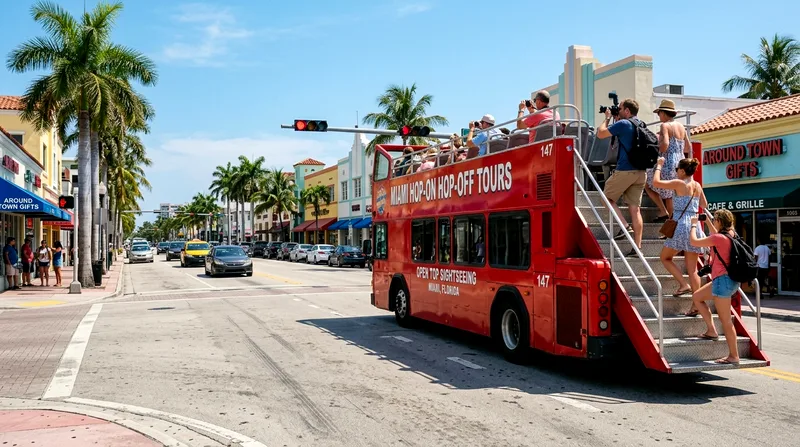
Comparing a Miami bike tour vs Segway tour? See cost, fitness demands, coverage, and crowd trade-offs so you book the right one for your trip.
Options at a Glance
Ask ten Miami visitors whether to book a bike tour or a Segway tour and you'll get ten different answers, because the two aren't really competing for the same traveler. A Miami bike tour vs Segway tour decision usually comes down to how far you want to go, how much heat and effort you're willing to tolerate, and whether you want a guide managing a pack of riders or a smaller, slower-moving group gliding along a boardwalk.
Bike tours in Miami are typically self-paced or lightly guided rides covering 8 to 15 miles over two to three hours, often weaving through South Beach, the Venetian Causeway, and sometimes out toward Biscayne Bay. Segway tours are shorter, tighter-radius experiences — usually 1.5 to 2 hours covering 3 to 6 miles — built around a flat, low-traffic loop like the Beachwalk or a Wynwood mural circuit.
Neither is objectively "better." A cyclist in decent shape will see more of Miami in the same afternoon than a Segway rider will. But a 65-year-old traveler with hip replacement history, or a parent managing two kids under 10, might find the bike option exhausting or logistically messy, while a Segway's stand-and-balance format removes the pedaling entirely.
Bike tours cost less and cover more ground, while Segway tours demand less physical effort but stick to smaller, flatter areas.
Miami bike tour vs Segway tour: cost, effort, and coverage compared
| Tour Type | Typical Cost (per person) | Duration | Distance Covered | Fitness Level | Best For |
|---|---|---|---|---|---|
| Guided bike tour | $35-$65 | 2-3 hours | 8-15 miles | Moderate | Solo travelers, couples, sporty visitors |
| Self-guided bike rental | $15-$25 | Flexible | Variable | Moderate | Budget travelers, flexible itineraries |
| Guided Segway tour | $55-$90 | 1.5-2 hours | 3-6 miles | Low | Couples, seniors without balance issues, photo-focused visitors |
| Private Segway tour | $90-$140 | 1.5-2 hours | 3-6 miles | Low | Couples wanting a quieter group |
| Electric-assist bike tour | $45-$75 | 2-3 hours | 8-15 miles | Low-Moderate | Seniors, travelers with joint concerns |
Prices and distances are typical ranges and vary by operator and season — check current listings before booking.
What a Miami bike tour includes
Most Miami bike tour bookings include the bike itself, a helmet, and a guide — though some outfits run self-guided GPS-map rentals instead of a led group. Expect group sizes anywhere from 6 to 15 riders, with stops for photos at spots like the Art Deco Historic District, Lummus Park, or the Miami River. Tours generally run two to three hours, though full-day rental options exist if you want to design your own route through the Design District or down to Coconut Grove. Water is sometimes included; sunscreen and your own water bottle are not guaranteed, so ask before you book.
What a Segway tour includes
A Segway tour includes the device, a helmet, and — critically — a mandatory training session, usually 10 to 15 minutes, before the group ever leaves the staging area. This isn't optional: operators won't let you roll off without demonstrating basic control, turning, and stopping. Group sizes run smaller than bike tours, often capped around 6 to 10 riders, because guides need to keep visual contact with everyone at low speed. Tours are almost always guided, rarely self-directed, and tend to stick to pedestrian-friendly, flat surfaces rather than streets with real traffic.
Cost Comparison
Price is where the Miami bike tour vs Segway tour comparison gets most interesting, because the gap is bigger than most people expect. A guided bike tour in Miami typically runs $35 to $65 per person for a two- to three-hour outing, and bike rentals alone (no guide) can go as low as $15 to $25 for a few hours. Segway tour Miami cost tends to sit higher — commonly $55 to $90 per person for a comparable time window — because the equipment is more expensive to maintain and insure, and smaller group sizes mean less revenue per guide-hour for the operator.
That price difference isn't trivial for a family of four. Choosing bikes over Segways on a single afternoon outing could save $80 to $150 total, money better spent on a Biscayne Bay boat tour or dinner in Little Havana. Always confirm what's bundled — some bike tours throw in a drink stop or snack, while some Segway packages include photos taken by the guide. Compare current prices when booking, since both categories fluctuate by season and operator.
Bike tour pricing factors
Expect to pay more for electric-assist bikes, which are increasingly common in Miami's heat and add $10 to $20 to a rental or tour price. Night tours through Wynwood's mural district sometimes cost a premium over daytime South Beach loops because of added lighting and safety staffing. Group tours with a live guide cost more than self-guided GPS rentals, but you lose the narration and historical context in exchange for flexibility — you can linger in the Design District as long as you like without holding up a group.
Segway tour pricing factors
Segway tour pricing is driven heavily by the mandatory training time, which operators bake into the total slot length, and by stricter liability insurance than bike rentals require. Longer routes — say, 2.5 hours covering both South Beach and a stretch toward the marina — push toward the top of that $55 to $90 range. Private or semi-private Segway bookings for couples can cost noticeably more per person than a shared group slot, sometimes 40% to 60% above the standard group rate.
Fitness Level and Effort
This is the section that should actually decide your booking. A bike tour is real exercise — you're pedaling for two-plus hours, often in Miami humidity that sits above 80% for much of the year. A Segway tour is close to zero cardiovascular effort; you stand, lean, and let the device do the work. If you're booking for a senior traveler group or anyone recovering from illness, that distinction matters more than price or route.
Physical demands of biking
Plan on moderate exertion: flat terrain throughout (Miami has almost no hills), but sustained pedaling for 8 to 15 miles adds up, especially after 10 a.m. when the sun gets serious. Riders with knee issues, lower back problems, or limited cardio fitness should ask about electric-assist bikes, which cut effort substantially without changing the route. Kids under about 12 usually need a tandem or trailer option rather than riding solo in traffic-adjacent areas like the Venetian Causeway.
Physical demands of Segway riding
Segways demand balance, not stamina — your core and calves do light stabilizing work, but there's no sustained aerobic load. The catch is the learning curve: first-timers often wobble for the first five to ten minutes, and people with inner-ear issues or significant balance impairments should skip it entirely. Most operators set a minimum age (commonly 12) and a weight range (roughly 100 to 260 lbs), so check requirements before booking for kids or larger travelers.
Coverage Area and Pace
Ground covered is the single biggest practical difference in the Miami bike tour vs Segway tour debate. Bikes move faster and sustain that speed longer, so a single tour can realistically connect South Beach, the Venetian Causeway, and a loop near Biscayne Bay in one outing. Segways cap out around 8-12 mph and operators deliberately keep speeds lower for safety, which means routes stay compact — usually one neighborhood, not three.
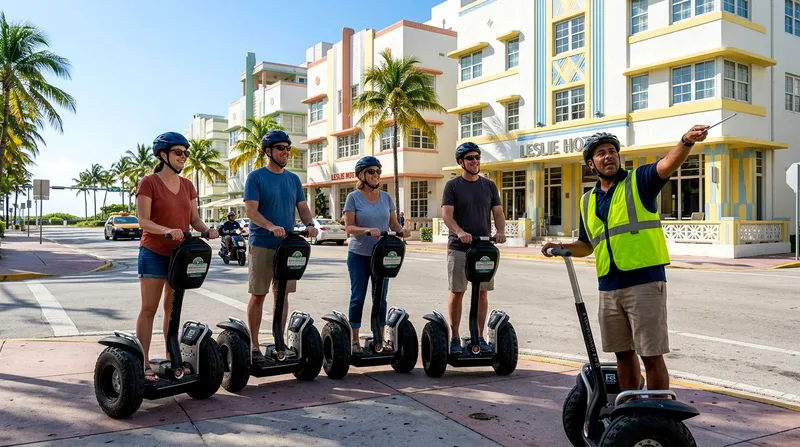
Distance and neighborhoods covered
A typical Miami Beach bike tour might string together the Art Deco district, Lummus Park, and a stretch of the Beachwalk within two hours, sometimes extending to Coconut Grove or the Miami River on longer itineraries. Segway tours rarely leave a single district — South Beach's pedestrian paths or a Wynwood mural loop are the standard options, since the devices aren't built for mixed vehicle traffic or longer causeway crossings.
Speed and route flexibility
Bikes hit 10-15 mph comfortably and can detour down a side street on a whim if you're on a self-guided rental. Segways move at a fixed, guide-controlled pace with little room for spontaneous detours — you go where the group goes, when the group goes. If flexibility matters more to you than ground covered, a self-guided bike rental beats both guided formats.
Crowds and Views
Miami's sidewalks and bike paths get crowded fast, especially on Ocean Drive and the Lincoln Road pedestrian mall during midday. How each tour handles that crowding differs quite a bit.
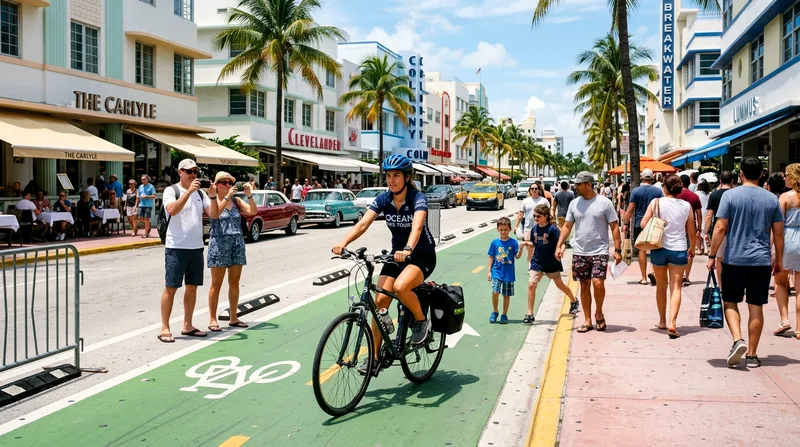
Tourist density and accessibility
Bikes can duck onto dedicated lanes along the Beachwalk and slip past foot traffic; Segways, moving slower and in a tighter cluster, tend to get boxed in by pedestrians near busy blocks like Ocean Drive on a Saturday afternoon. Early morning tours — before 9 a.m. — dodge both the crowds and the worst heat, and most operators offer that slot for exactly this reason.
Vantage points and photo opportunities
Segways put you a few inches higher than walking height, which actually helps for photos over crowds on Lincoln Road or in front of Wynwood murals. Bikes move too fast for in-motion shots but make it easy to stop anywhere for a photo without disrupting a tight group formation. If photography is your priority, a guided Segway tour with built-in photo stops often beats a bike tour where guides are reluctant to pause a pack of 12 riders too often.
Who Should Choose Which
Solo travelers and sporty types should lean bike, full stop — it's cheaper, covers more of Miami, and doubles as actual exercise on a trip that's otherwise mostly eating and sitting on beaches. Couples looking for something different from the standard South Beach walk might prefer a Segway for the novelty factor alone, even paying the premium.
Families with younger kids face the trickiest call: Segways have minimum age and weight requirements that exclude most kids under 12, while bike tours need tandem or trailer setups for small children, which not every operator stocks. Senior travelers without balance concerns often do better on a Segway precisely because it removes pedaling fatigue, though those with vertigo or inner-ear problems should avoid it entirely and consider a trolley or walking tour instead.
European travelers used to cycling as daily transport will find Miami's bike tours familiar and comfortable; Segways, by contrast, are more of a one-off novelty that doesn't exist in most home cities. Compared to a Key West bike tour — flatter, shorter, more compact — Miami's routes are longer and more varied, which favors bikes if you want real distance. Compared to Fort Lauderdale, where canals and waterways dominate the scenery, Miami's bike routes lean more urban, mixing Art Deco streets with bay views.
If your trip includes a Biscayne Bay boat tour or a Miami River cruise, a bike tour pairs naturally the same day — you've already covered ground on land, so let the water portion be the rest. Compare current bike and Segway tour prices and availability before you book, since seasonal demand around events like Art Basel or spring break pushes rates up noticeably.
Frequently asked questions
How much does a Miami bike tour cost compared to a Segway tour?
A guided Miami bike tour typically runs $35 to $65 per person for two to three hours, while a guided Segway tour Miami cost usually falls between $55 and $90 for a shorter 1.5 to 2 hour slot. Self-guided bike rentals can drop as low as $15 to $25. The gap comes from Segway equipment costs and smaller group sizes, not from a longer or more elaborate experience.
Do I need to be fit to take a Segway tour in Miami?
No real fitness is required — Segways demand balance more than stamina, and the guide-led training session (10 to 15 minutes) covers the basics before you start. You do need decent inner-ear balance; people with vertigo or significant balance disorders should skip it. Most operators set a minimum age around 12 and a weight range of roughly 100 to 260 lbs.
Which tour covers more ground in Miami?
Bike tours cover considerably more ground — typically 8 to 15 miles versus 3 to 6 miles on a Segway. A bike tour can realistically link South Beach, the Venetian Causeway, and parts of Biscayne Bay in one outing, while Segway tours generally stay within a single district like South Beach or Wynwood due to speed limits and safety protocols.
Are bike tours or Segway tours better for photos?
Segways edge ahead for photo opportunities because the slight elevation boost helps you shoot over crowds, and guides tend to build in dedicated photo stops at mural walls or waterfront points. Bike tours offer more scenery variety but move too fast for in-motion shots, and large group sizes can make guides reluctant to stop frequently.
Can beginners ride a Segway in Miami?
Yes — every reputable Segway tour operator runs a mandatory training session before departure, and most first-timers get comfortable within five to ten minutes. The learning curve is minor compared to cycling in traffic-adjacent areas, which makes Segways a reasonable pick for nervous riders, as long as they meet the age and weight requirements.