A practical Miami neighbourhoods guide covering South Beach, Wynwood, Little Havana and more—vibe, attractions, food, and where to stay.
Miami Neighbourhoods Guide: How the City Actually Breaks Down
Miami isn't one place — it's a cluster of distinct districts stitched together by causeways, a few highways, and a lot of traffic. A Miami neighbourhoods guide matters more here than in most U.S. cities because where you base yourself genuinely changes your trip. Stay in South Beach and you get walkable nightlife and beach access but pay a premium and deal with crowds. Stay in Coral Gables and you get quiet, leafy streets and good restaurants but you're a 20-minute drive from the sand.
This guide breaks down the areas tourists actually use: Downtown Miami and Brickell, South Beach and the Art Deco Historic District, Wynwood and the Design District, Little Havana and Allapattah, Coral Gables and Coconut Grove, and the quieter stretches of Miami Beach north of 5th Street. Each has a different personality, price point, and reason to visit. None of them require more than a 30-minute drive from Miami International Airport, which is one reason Miami works well even for a short layover extension — unlike, say, spreading a trip across Tampa and Naples, which are two hours apart.
Downtown Miami & Brickell
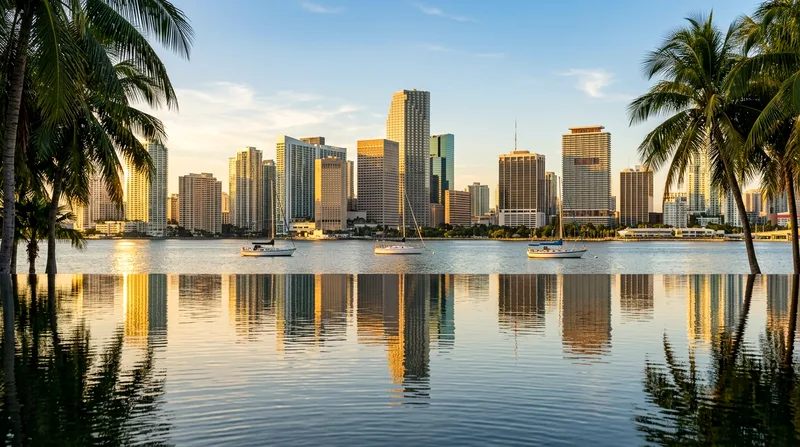
Downtown and Brickell are Miami's financial and civic core, and they feel it — glass towers, a monorail-style people mover called the Metromover (free to ride), and a skyline that photographs well from a sunset boat tour on Biscayne Bay. This isn't where you come for beach time; it's where you come for city energy, river-front dining, and proximity to the Port of Miami if you're starting or ending a cruise.
Urban culture and waterfront dining
Brickell City Centre and the Miami Riverwalk give you shopping and dockside restaurants without needing a car. Bayside Marketplace, right downtown, is touristy but it's also the departure point for most Biscayne Bay boat tours and Everglades airboat transfers, so it's worth passing through even if you don't shop there. Evenings skew toward rooftop bars and steakhouses aimed at the finance crowd rather than beach-casual spots — pack accordingly if you're staying here.
Museums and business district energy
The Pérez Art Museum Miami and the Frost Science Museum sit side by side on the bay, and both are worth a half-day each — Frost Science runs about $35 for adult general admission, PAMM around $18, though check current prices before booking. Brickell itself is mostly residential towers and lunch spots for office workers; it's convenient and safe, but it has little tourist texture after dark. If you want nightlife, go to Wynwood or South Beach instead — Brickell's bar scene is corporate happy-hour, not destination nightlife.
South Beach & Art Deco Historic District
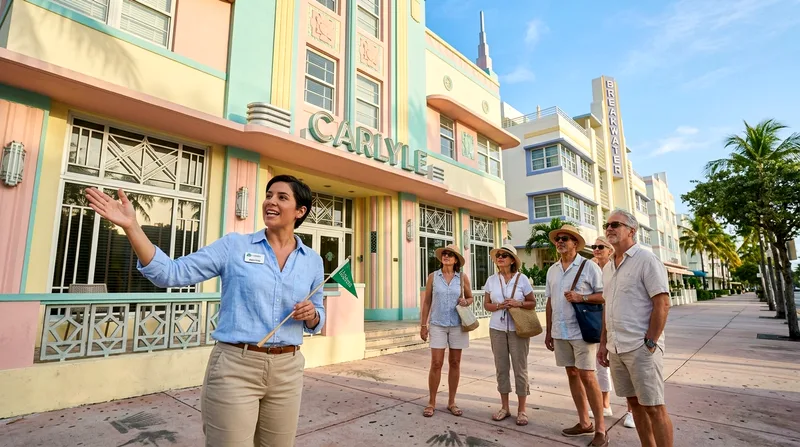
This is the Miami most people picture, and for good reason — it delivers on the postcard. Ocean Drive's pastel hotels, the Art Deco Historic District's low-rise 1930s buildings, and direct beach access within a few blocks of almost any hotel make South Beach the default first-timer choice. It's also the most expensive and most crowded option, and weekend foot traffic on Ocean Drive and Collins Avenue can feel more like a theme park than a neighbourhood.
South Beach wins on beach access and nightlife, but Coral Gables and Little Havana offer more character per dollar for travelers willing to drive a bit.
Miami neighbourhoods guide: comparing the top districts for tourists
| Neighbourhood | Best For | Beach Access | Nightlife Level | Typical Hotel Price Tier |
|---|---|---|---|---|
| South Beach | First-timers, nightlife, couples | Direct | High | High |
| Downtown/Brickell | Business travel, cruise stays | None nearby | Moderate | Mid-High |
| Wynwood/Design District | Art lovers, fashion travellers | None | Moderate | Mid |
| Little Havana | Culture, food, history | None | Low | Low (limited lodging) |
| Coral Gables/Coconut Grove | Families, couples, seniors | Short drive | Low | Mid-High |
| Mid/North Beach | Families, budget beach stays | Direct | Low-Moderate | Mid |
Price tiers and crowd levels are general patterns, not fixed rates — check current listings when booking.
Art Deco architecture and nightlife
A guided Art Deco walking tour (typically 90 minutes, around $25–30) run through the Miami Design Preservation League is the best way to actually understand what you're looking at — the stepped rooflines, porthole windows, and neon are easy to photograph but easy to misread without context. Nightlife concentrates on Washington Avenue and Collins, with clubs running later than almost anywhere else in Florida. If clubbing until 4am isn't your trip, book a hotel a few blocks west of Ocean Drive to escape the noise while keeping the beach walk.
Beach access and entertainment
South Beach proper runs roughly from 1st to 23rd Street, and the sand is wide and well-maintained with lifeguard stations every few blocks. Lincoln Road, a pedestrian mall a few blocks inland, has better and more varied food than Ocean Drive's tourist-trap restaurants — a trade worth making most nights. Parking is genuinely bad; if you're not staying here, come by rideshare or the South Beach Local trolley rather than fighting for a spot.
Wynwood & Design District

Wynwood turned a warehouse district into an open-air gallery, and it's one of the few Miami neighbourhoods that genuinely rewards walking rather than driving. The Design District next door is its opposite in tone — flagship stores for Louis Vuitton, Hermès, and similar brands, with architecture as polished as Wynwood's is raw. Visiting both in one day gives you a useful contrast: street culture versus luxury retail, a five-minute drive apart.
Street art and creative scene
Wynwood Walls, the anchor outdoor mural park, charges around $12 entry and is worth it for the concentration of large-scale work, though the surrounding streets have plenty of free murals too. Go on a weekday morning if you want photos without crowds; Saturday afternoons draw tour groups and it gets genuinely packed. Food here leans toward breweries and casual spots — good for a few hours, not a sit-down dinner destination.
Shopping and contemporary galleries
The Design District's galleries (the ICA Miami, free admission, is the standout) make it worth a stop even if you're not buying anything. Compare it mentally to Coral Gables' shopping, which is older money and less showy — Design District is where Miami's fashion-forward and luxury travellers actually spend money. Avoid driving here during Art Basel week in December if crowds aren't your thing; otherwise it's calm and easy to park near.
Little Havana & Allapattah
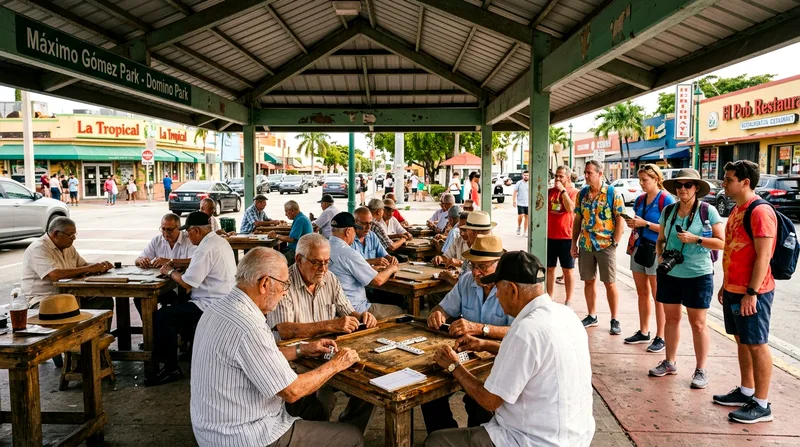
Little Havana, centred on Calle Ocho (SW 8th Street), is the most culturally dense neighbourhood on this list and the one most visitors rush through instead of lingering in. Allapattah next door is grittier and less touristed, home to the Rubell Museum and a growing food scene, but it's not a place to wander without a destination in mind after dark.
Cuban heritage and authentic food
Domino Park, where retirees play dominoes in the open air, and the Cuban coffee windows along Calle Ocho are the real draw — not a single attraction but a texture of daily life that Wynwood or Brickell can't replicate. A 2-hour guided walking or food tour (commonly $45–65) is a smart first move here, since it's easy to walk past the interesting parts without context. Compare this to Key West's Cuban heritage sites, which are more curated and museum-like; Little Havana is lived-in, not staged.
Local markets and cultural landmarks
The Marlins ballpark borders Little Havana, and the Rubell Museum in Allapattah (around $15 entry) is a serious contemporary art collection that draws far smaller crowds than PAMM. This isn't a neighbourhood for hotel-hunting — accommodation options are thin — but it's an easy 15–20 minute drive or rideshare from Downtown or Coral Gables, so most people visit for an afternoon and evening rather than staying overnight.
Coral Gables & Coconut Grove
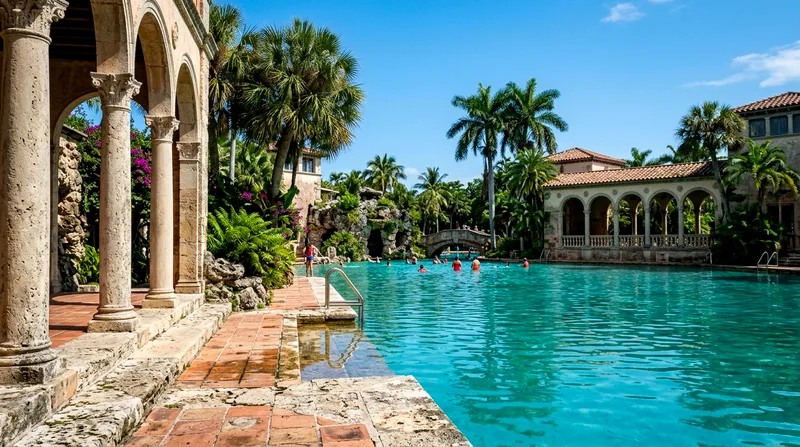
These two are Miami's old-money, tree-shaded neighbourhoods, and they're the best fit for families, couples, and senior travellers who want charm without beach-town noise. Coral Gables was master-planned in the 1920s with Mediterranean Revival architecture and strict design codes that still apply — it looks nothing like the rest of Miami, closer in feel to parts of coastal Spain than to Ocean Drive.
Mediterranean architecture and parks
The Biltmore Hotel and the Venetian Pool (a spring-fed public pool built in 1923, entry around $20–25 depending on season) anchor Coral Gables' sightseeing. Fairchild Tropical Botanic Garden, nearby, is one of the best plant collections in the U.S. and an easy half-day for families. This is a driving neighbourhood — sidewalks exist but distances between sights run 10–15 minutes by car, unlike the compact walkability of South Beach or Wynwood.
Shopping, dining, and village atmosphere
Coconut Grove has a looser, bohemian history and now mixes boutique shopping with waterfront parks like Peacock Park — good for an evening stroll after dinner. CocoWalk and the surrounding streets have decent mid-range dining, though nothing that rivals the Design District for high-end options. If your idea of Miami is loud and beach-forward, skip staying here; if you want a base that feels more like a small Mediterranean town, this beats anywhere in Miami Beach.
Miami Beach Beyond South Beach
Miami Beach runs much farther north than most visitors realize — South Beach is just the southern few miles. Mid-Beach and North Beach offer the same sand and warm water with a fraction of the crowd and noticeably lower hotel rates, often 20–30% less than comparable South Beach properties.
Mid-Beach and North Beach quieter vibes
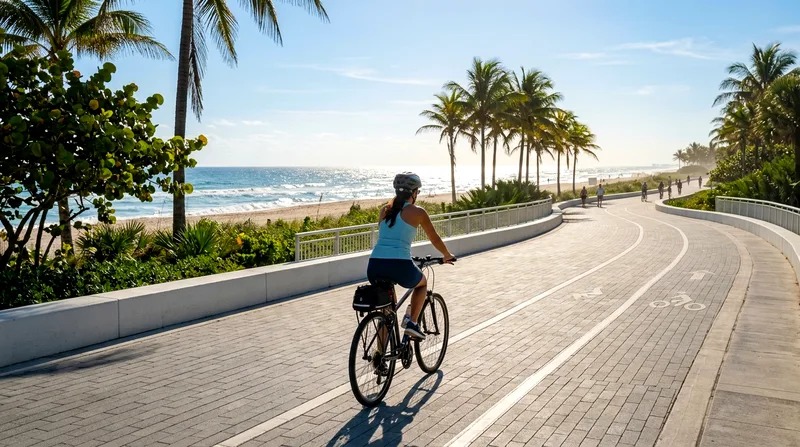
Mid-Beach, roughly 23rd to 63rd Street, has larger resort-style hotels and a calmer stretch of sand — good for couples wanting beach access without the club noise. North Beach, above 63rd Street, is more residential and has an Art Deco district of its own (North Beach Historic District) that gets a fraction of the foot traffic of South Beach's version. It's a reasonable comparison to Fort Lauderdale's beach areas — similarly relaxed, but with a shorter drive back into Miami's attractions.
Family-friendly beaches and local spots
North Shore Open Space Park, with its dune boardwalk, is a better bet for families than the packed sand near 5th Street. Restaurants here skew toward longtime local spots rather than see-and-be-seen scenes — fewer influencers, more regulars. If you're renting a car anyway, basing in North Beach and driving 15–20 minutes south for nightlife is often cheaper and calmer than paying South Beach rates to be in the middle of it.
Frequently asked questions
Which Miami neighbourhood is best for first-time visitors?
South Beach, despite the crowds, gives first-timers the clearest hit of what Miami is known for — Art Deco architecture, beach access, and nightlife within walking distance. Stay a few blocks off Ocean Drive to cut noise while keeping the location advantage. If you have more than three days, add a half-day in Coral Gables or Little Havana to see a different side of the city.
What's the difference between Miami and Miami Beach?
Miami Beach is a separate barrier island city connected to mainland Miami by causeways — it includes South Beach, Mid-Beach, and North Beach. "Miami" usually refers to the mainland, covering Downtown, Brickell, Wynwood, Little Havana, and Coral Gables. They're easy to confuse on a map, but driving between them can take 20–40 minutes depending on traffic and causeway congestion.
Which neighbourhood has the best nightlife?
South Beach, specifically Washington Avenue and Collins Avenue, has the highest concentration of late-night clubs and runs until 4–5am on weekends. Wynwood has a younger, more casual bar and brewery scene that wraps up earlier, usually by 1–2am. Brickell's nightlife is more happy-hour and rooftop-bar focused, aimed at a local professional crowd rather than tourists.
Where should I stay for beach access and culture?
No single area nails both perfectly, but Mid-Beach gets you closer than most — beach access similar to South Beach with a 15-minute drive to Little Havana or Downtown's museums. If culture matters more than ocean views, Coral Gables puts you near the Biltmore, Venetian Pool, and Coconut Grove, with a 15-20 minute drive to the sand.
What's the most authentic local neighbourhood in Miami?
Little Havana is the strongest answer — Calle Ocho's coffee windows and Domino Park reflect daily life, not a staged attraction. Allapattah, just north, is less polished and has fewer tourist services but rewards visitors interested in contemporary art and a quieter, more local food scene.